Tel: +86 15262904857 E-mail: overseas@jsbaileybridge.com
- All
- Product Name
- Product Keyword
- Product Model
- Product Summary
- Product Description
- Multi Field Search


Views: 0 Author: Site Editor Publish Time: 2026-07-15 Origin: Site


Infrastructure managers and contractors face a relentless primary challenge today. They must maintain smooth traffic flow while meeting strict project deadlines. This pressure mounts significantly when upgrading aging bridges or handling sudden emergency washouts. Road closures cripple local economies and cause massive commuter frustration. Traditional bridge construction timelines often stretch into long months or even years. These lengthy schedules drain municipal budgets and leave sites vulnerable to weather disruptions. Prolonged delays simply compound the economic strain on regional supply chains.
Fortunately, rapid deployment of pre-engineered systems offers a proven alternative. The modern Compact 200 Bailey Bridge stands as the industry-standard solution. You will learn how this system efficiently handles both temporary traffic diversion and semi-permanent civil infrastructure needs. We will explore its rigorous engineering standards, logistical advantages, and strategic rollout methods below.
Predictable Deployment: Modular components allow for assembly in days, drastically reducing site disruption and labor costs.
Standardized Engineering: The CB200 design meets rigorous modern highway loading standards (e.g., AASHTO, Eurocode) despite its modular nature.
Logistical Efficiency: Standardized panel sizes eliminate the need for specialized heavy transport, easily fitting into standard ISO shipping containers.
Asset Reusability: Functions initially as a temporary detour bridge but offers high lifecycle ROI through continuous redeployment across multiple municipal projects.
Road closures trigger immediate and severe economic impacts. User delay costs accumulate rapidly during long commuter traffic jams. Supply chain bottlenecks disrupt regional commerce heavily. Extended project overhead drains vital public funding. Managers must avoid these expensive pitfalls daily. Local businesses suffer greatly during prolonged route closures. Shoppers avoid construction zones entirely. Delivery trucks face extensive rerouting. These detours consume excess fuel and inflate daily transit times.
The traditional detour dilemma presents serious, tangible hurdles. Earthwork bypasses damage the surrounding delicate environment. Custom-built temporary structures demand massive financial budgets. They also suffer from severe weather delays during construction. Heavy rain easily ruins a temporary dirt bypass. It washes away weeks of expensive earthmoving labor.
Project managers need specific, uncompromising success criteria. They require a highly reliable temporary detour bridge. It must support continuous heavy commercial truck traffic safely. The chosen solution must demand minimal foundation work. It must guarantee a fixed, highly predictable installation timeline. By meeting these criteria, teams keep construction projects moving forward efficiently. We see successful deployments saving municipalities millions in potential delay penalties. Deploying a proper crossing restores normal traffic patterns swiftly. It keeps the local economy functioning while main construction proceeds.
What exactly defines this specific class of modular steel bridge? The "Compact 200" or CB200 represents a direct evolution of the original WWII design. Engineers optimized it specifically for modern civil loads. It handles demanding daily traffic requirements effortlessly. Evaluators look closely at specific technical dimensions before procurement. Standard panel specifications measure exactly 3.048 meters long by 2.134 meters high. These precise dimensions ensure complete uniformity across all builds. They guarantee interoperability between different project sites.
Material grades utilize highly advanced modern high-yield steel. Manufacturers typically use Q345, Q355, or S355 equivalents. These superior metals replace outdated legacy materials entirely. They offer vastly improved tensile strength. Upgraded steel resists deformation under continuous heavy truck axles. It provides a stiffer, more reassuring ride for public drivers. You gain tremendous confidence using these updated materials.
Configuration flexibility allows engineers to adapt the structure easily. Crews build single-lane or double-lane options rapidly. They vary truss configurations based on strict span requirements. You might use a basic Single-Single setup for short gaps. You could upgrade to Triple-Triple Reinforced setups for extreme spans. This flexibility directly accommodates any required load safely.
Compact 200 Technical Dimensions Summary
Technical Dimension | Standard Specifications |
|---|---|
Panel Size | 3.048m (10ft) Length x 2.134m (7ft) Height |
Material Composition | High-yield steel (Q345, Q355, S355 or equivalent) |
Lane Width Options | Single-lane or Double-lane configurations |
Truss Combinations | Single-Single up to Triple-Triple Reinforced |
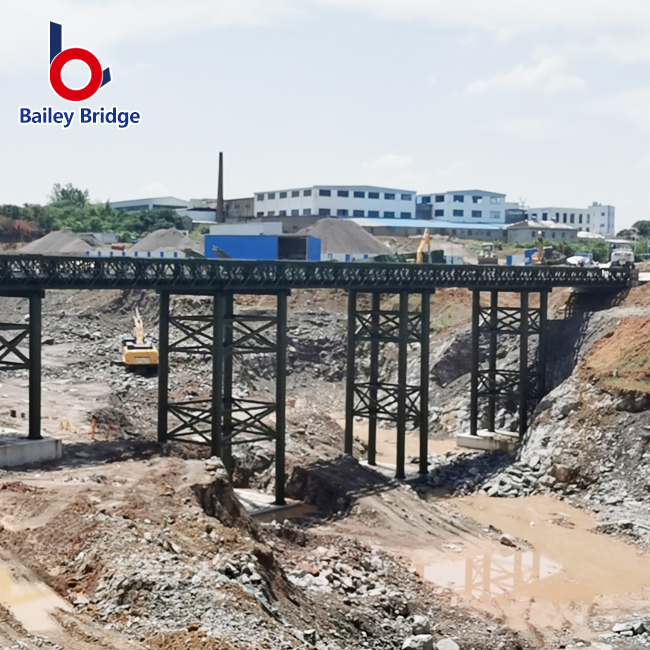
Civil engineers often display natural skepticism regarding temporary structures. We address this directly by highlighting strict compliance standards. The modern CB200 design meets Federal Highway Administration (FHWA) guidelines fully. It achieves rigorous AASHTO HL-93 or HS20-44 load ratings safely. This documented compliance guarantees reliable performance under heavy, continuous use. Inspectors approve these structures quickly due to standardized, proven engineering.
You must understand the distinct difference between temporary and permanent applications. Temporary use generally tracks fatigue life over a few short years. Permanent setups require vastly different structural considerations. Deck type heavily impacts overall physical longevity. Steel orthotropic decks outlast traditional timber decks significantly. Timber wears down under constant tire friction. Steel resists this surface degradation beautifully. Anti-corrosion treatments improve environmental durability significantly. Hot-dip galvanization provides excellent long-term rust protection. It shields the steel from harsh road salts and winter weather.
We must highlight one critical, non-negotiable assumption. The superstructure arrives at your site completely pre-engineered. However, actual load capacity strictly depends on site-specific geotechnical validation. Engineers must validate the abutment soil thoroughly. The best steel truss fails instantly if the ground beneath it gives way. You must conduct proper soil boring tests. You need verified bearing capacity data before assembly begins. This step ensures total public safety.
Logistical advantages set this pre-engineered system apart completely. Components offer incredible transportability across long distances. Buyers do not require expensive oversized load permits. Parts arrive quickly via standard commercial flatbed freight. They fit neatly into standard ISO shipping containers for ocean transit. You avoid complex routing requirements for oversized trucks.
Crews typically utilize the highly efficient "Cantilever Launch" method. They attach a lightweight launching nose to the front panels. They push the assembled structure across the river gap on heavy rollers. A standard excavator or bulldozer provides the pushing force. This clever method eliminates massive heavy cranes operating inside the watercourse. It protects delicate aquatic environments perfectly. It also bypasses soft riverbank soil limitations entirely.
First-time crews face specific rollout risks during installation. You must mitigate these hurdles proactively. Let us review several common implementation pitfalls carefully:
Inadequate Staging Area: Ensure enough flat, stable ground exists behind the abutment. You need ample space for safe panel assembly before pushing.
Miscalculated Roller Heights: Double-check roller elevations before the launch begins. Incorrect heights cause severe structural jamming mid-push.
Improperly Leveled Bearing Plates: Verify abutment levels strictly. Uneven plates cause dangerous load distribution upon final landing.
Lack of Crew Expertise: Deploy a vendor-provided installation supervisor immediately. Unexperienced contractor crews benefit hugely from expert on-site guidance.
By addressing these risks early, you prevent costly launch day delays. You protect your workers and secure the project timeline effectively.
Project owners must perform a strict, realistic financial evaluation. You should move beyond analyzing just the initial capital expenditure (CAPEX). Compare the pure cost of purchasing the structure against leasing it. Leasing works perfectly for a short, strictly defined detour project. It keeps upfront municipal costs remarkably low. It bypasses long-term maintenance facility storage requirements. You simply return the asset when construction concludes.
Leasing transfers the burden of inspection back to the vendor. The vendor handles component recertification between deployments. Purchasing requires your team to manage these quality control steps. You must track panel usage history meticulously. Both models offer distinct operational advantages. Choose the path matching your organizational maturity.
Purchasing makes better financial sense for busy municipal highway departments. If you expect multiple aging bridge replacements over ten years, buying offers superior value. You recover your initial investment through continuous, repeated redeployment. You own a flexible asset ready for rapid emergency response. Procurement models depend entirely on your long-term infrastructure pipeline. Evaluate your upcoming five-year project roadmap carefully before deciding. Consider available yard space for storing unused panels. Analyze your internal crew's capacity to perform routine component maintenance.
Moving from initial research to vendor engagement requires a clear decision framework. You must transition from theoretical planning to actionable vendor quotes. Do not approach manufacturers empty-handed. Prepare specific, accurate data sets before requesting formal proposals. Accurate data ensures vendors provide correct structural configurations immediately.
Consider forming a dedicated internal procurement team. They should gather all field measurements carefully. They must consult local traffic authorities regarding strict load requirements. Rushing this data collection leads to inaccurate budget estimates. It causes frustrating delays during the final design phase. Use the required data checklist below to organize your vendor request:
Clear Span Length: Measure the exact distance required between the two supporting abutment faces.
Required Lane Width: Determine if local traffic volumes demand a single or double-lane configuration.
Maximum Expected Vehicle Weight: Calculate the highest expected vehicle weight and specific axle loads for the route.
Desired Deployment Timeline: State your exact desired delivery and installation dates to verify vendor inventory availability.
This structured approach saves valuable time. It prevents costly miscommunications during the critical procurement phase.
The CB200 represents far more than an emergency fallback option. It stands firmly as a strategic asset for modern construction. It maintains crucial project momentum seamlessly. It controls expensive detour costs effectively. Reliable infrastructure relies heavily on predictable, proven systems. We encourage readers to consult directly with licensed structural engineers. Run a preliminary load configuration for your specific site immediately. Request a detailed, site-specific modular bridge proposal today. Proactive planning guarantees much smoother execution tomorrow. You secure community goodwill by minimizing irritating traffic disruptions.
A: It spans up to roughly 60 meters (200 feet) unpiered. This maximum length depends strictly on your required load class. It also relies heavily on the specific truss configuration chosen. Heavier loads naturally reduce the maximum safe unpiered span limit.
A: Yes, it easily accommodates continuous heavy truck traffic. You must ensure the deck and truss are properly configured for modern highway loads, such as HL-93. Regular maintenance checks on all modular connections remain essential for safety.
A: While the bridge itself is entirely modular, the foundations remain traditional. You will need concrete abutments, steel piles, or heavy timber cribbing for temporary setups. Engineers must design these foundations strictly to match local soil bearing capacities.
A: Installation timelines prove incredibly efficient. A typical installation requires roughly 1 to 3 weeks, including the cantilever launch. This rapid timeline assumes you have pre-completed abutments ready and an experienced assembly crew working on site.
