Tel: +86 15262904857 E-mail: overseas@jsbaileybridge.com
- All
- Product Name
- Product Keyword
- Product Model
- Product Summary
- Product Description
- Multi Field Search


Views: 0 Author: Site Editor Publish Time: 2026-07-11 Origin: Site


In disaster relief, unexpected infrastructure failure, or critical project delays, you face intense pressure. Every passing minute restricts access and threatens community safety. Procuring a replacement structure requires balancing extreme urgency with rigorous safety standards. You cannot afford mistakes during this process. Rushing your procurement without validating structural limitations, site conditions, or deployment logistics often leads to disaster. It causes massive delays, logistical nightmares, and unacceptable safety risks for end users.
This guide provides a definitive, decision-stage framework designed specifically for project managers, civil engineers, and procurement teams. You will learn how to evaluate bridge specifications, assess vendor capabilities, and uncover hidden deployment risks before you issue a purchase order. We explore structural load ratings, span geometries, and essential substructure requirements. Equip yourself with these practical insights to make an informed, rapid, and secure infrastructure choice.
Verify Load and Traffic Requirements First: Ensure the design meets AASHTO HL-93 standards (or regional equivalents) for dynamic loads, especially if serving as a heavy-duty construction access bridge.
Assess Modularity and Deployment Speed: True emergency solutions must utilize interchangeable, pre-engineered components capable of standard freight transport and rapid assembly.
Scrutinize Site Pre-requisites: Span length, soil bearing capacity, and abutment design will dictate the type of temporary steel truss bridge you can safely deploy.
Evaluate Vendor Support Depth: A reliable vendor supplies more than steel; they provide site-specific engineering drawings, launch methodologies, and field advisors.
Engineers must validate design standards before finalizing any purchase. Structural integrity dictates public safety. You must verify alignment with recognized bodies like the FHWA, AASHTO, or European Eurocode requirements. These strict highway standards ensure the system performs reliably under stress. Generic claims of "heavy capacity" mean nothing without certified engineering validation.
You must differentiate between dynamic and static loads. Standard commuter traffic volume creates predictable, standard wear on a structure. However, heavy, concentrated axle loads act quite differently. Commercial freight and earth-moving equipment demand significantly higher structural capacity. You need to calculate the precise weight of the heaviest single vehicle crossing the gap.
Fatigue resistance matters deeply for extended deployments. Many emergency structures end up serving as detours for years. High daily traffic cycles stress the components continually. Over time, this causes structural micro-fractures. You should evaluate the steel grade carefully. Check the connection types to guarantee long-term fatigue endurance.
Do not underestimate implementation risks. You must calculate the impact factor correctly. Heavy machinery stresses a construction access bridge significantly during braking and acceleration. Under-calculating this dynamic impact leads to localized decking failure. It compromises structural safety entirely and stalls project progress.
Request stamped engineering charts for your exact load cases.
Specify the exact axle spacing of your heaviest equipment.
Determine the expected daily traffic volume to assess fatigue limits.
Account for extreme weather conditions like snow loads or heavy winds.
Clear span capabilities often dictate your available options. Determine the maximum un-piered distance your required system achieves. Project managers frequently select a modular temporary steel truss bridge precisely to avoid in-water work. This choice removes the complex need for intermediate pier construction. It keeps environmental regulators happy and speeds up deployment.
Check standard width offerings early in the process. You must decide between single-lane and multi-lane configurations based on traffic flow. Verify external pedestrian walkway options as well. Good systems allow you to cantilever walkways safely off the main structure. This separates foot traffic from heavy vehicles, drastically reducing accident risks.
Assess skewed alignment capabilities carefully. Abutments rarely sit perfectly perpendicular to the river or highway gap. The bridge system must accommodate these angled approaches. If the system cannot handle a skew, you will spend valuable time and money modifying the earthwork.
Apply strict shortlisting logic to your vendor options. Rule out systems requiring mid-span support if your site faces specific hazards. Deep water makes pier construction slow and dangerous. Heavy debris flows easily destroy intermediate supports. Environmentally protected wetlands strictly prohibit ground disturbance. Choose clear-span systems for these challenging environments.
Common Span Length Limitations and Applications
Span Range | Typical Application Scenario | Intermediate Pier Needed? |
30 to 80 feet | Small stream crossings, local road detours | No |
80 to 150 feet | Highway overpasses, mid-sized rivers | No |
150 to 250+ feet | Major river crossings, deep ravines | Often requires heavy truss variants |
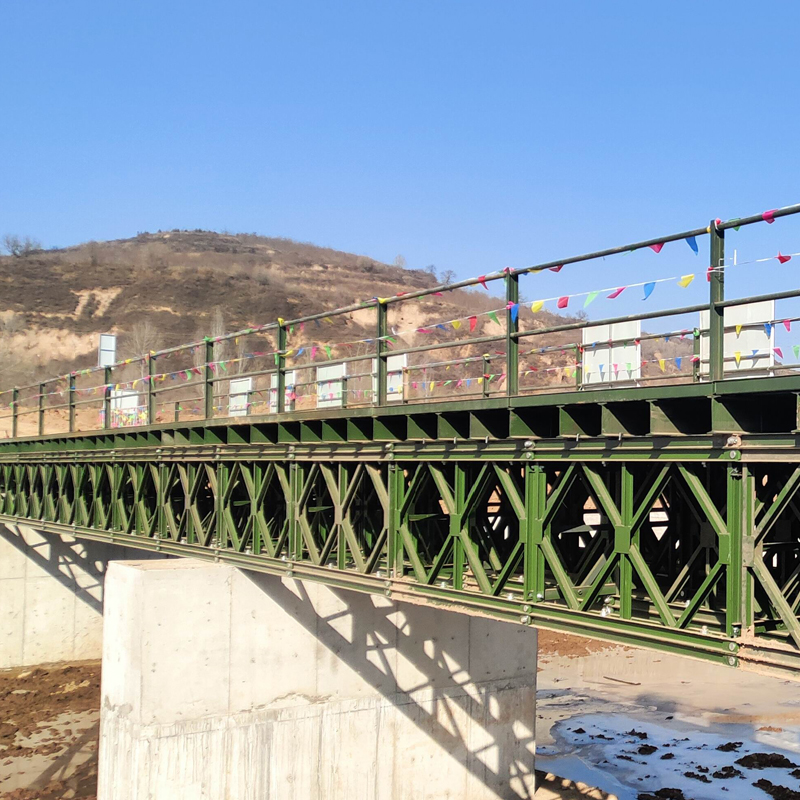
Transport efficiency defines your actual deployment speed. The fastest manufacturing times mean nothing if shipping fails. Specialized, oversize load permits cause massive delays across state or national borders. Verify all components fit comfortably inside standard shipping dimensions. They should load easily into standard 20ft or 40ft containers. They must also fit onto standard flatbed trailers.
Check the maximum weight of the heaviest individual component. This specific metric dictates your required crane size. Heavier parts demand larger, costlier lifting equipment on-site. In remote disaster zones, sourcing a massive crane proves nearly impossible. Lighter, modular parts keep logistics manageable.
Evaluate your launch methodology carefully. Assembly options vary widely between manufacturers. Can you assemble the bridge on dry land behind the gap? A cantilever launch uses a specialized launching nose to roll it out safely. This method requires minimal lifting equipment. Alternatively, does the system require a massive crane for a full-span lift?
Consider your specialized labor needs carefully. Reputable emergency temporary bridge systems utilize simple pin-connected designs. They avoid on-site welding entirely. This drastically reduces installation time. It also limits your reliance on highly specialized, expensive field welders. Your general contractor crews can assemble pin-connected systems using standard tools and heavy machinery.
Level the assembly area directly behind the abutment.
Position assembly rollers to guide the launching sequence.
Connect truss panels using standard steel pins and lock rings.
Attach the launching nose to guide the structure across the gap.
Push the structure forward incrementally using excavators or dozers.
Substructure compatibility is crucial for a safe installation. You must determine what the bridge requires for structural bearing points. Can it sit safely on pre-cast concrete blocks? Do you need heavy timber mats, or are driven piles mandatory? Abutment tolerances dictate these foundation choices. A flexible system adapts to less-than-perfect ground conditions.
Soil bearing pressure determines overall stability. The vendor must provide accurate dead weight reactions for the steel itself. They must also supply dynamic live load calculations. Your geotechnical engineer uses these numbers to verify soil conditions. The ground cannot yield under the abutments when heavy trucks cross. Failure here leads to catastrophic settling.
Check for elevation changes and approach gradients. The bridge deck must accommodate varying ground heights smoothly. Ensure the hardware package includes proper approach ramps. Transition plates are also strictly necessary for safe vehicle access. Without them, tires suffer damage, and suspension systems take severe impacts.
Substructure Setup Analysis
Substructure Type | Deployment Speed | Best Use Case | Durability Level |
Pre-cast Concrete Blocks | Very Fast | Firm soil, short-term detours | Moderate |
Timber Mats | Extremely Fast | Remote construction access | Low to Moderate |
Driven Steel Piles | Slow | Soft soil, long-term deployments | High |
Cast-in-Place Concrete | Very Slow | Semi-permanent replacements | Very High |
Compare available decking materials thoroughly. Orthotropic steel decks offer extreme durability under heavy traffic. They install rapidly because they lock directly into the framework. However, bare steel becomes slick in the rain. You must specify an epoxy anti-skid coating. Timber decking costs less initially. It is easier to replace in small sections. Yet, timber requires constant maintenance over time.
Verify crash-tested guardrail compatibility immediately. Safety remains non-negotiable for public roadways. Ensure the bridge supports approved barrier systems. They must comply with local transportation department regulations, such as NCHRP 350 or MASH standards. Flimsy pedestrian rails do not stop moving vehicles.
Ask vendors for historical regulatory approvals. Past success proves future reliability. Pre-approvals from local Departments of Transportation (DOTs) are incredibly valuable. They expedite the emergency permitting process significantly. If a state DOT already recognizes the system, your project avoids weeks of bureaucratic red tape.
Failing to apply anti-skid coatings in high-rainfall regions.
Using untreated timber in areas prone to severe rot or insect damage.
Ignoring transition plates, causing severe bumps at the bridge entry.
Assuming all guardrails are crash-tested without asking for certification data.
Vendor engineering support establishes crucial operational trust. A reliable supplier provides far more than just raw steel components. Do they provide stamped, site-specific engineering drawings? Does the package include a highly detailed, step-by-step launch manual? You also need an on-site technical representative during the installation phase to guide your crew.
Watch out for clear vendor red flags. Avoid companies offering generic solutions without questions. One-size-fits-all load charts are dangerous for complex infrastructure. The vendor must offer thorough engineering reviews of your specific site constraints. Without this dedicated review, you risk structural failure and massive liability.
Communication speed matters immensely during a crisis. Assess how quickly the engineering team responds to your initial inquiries. If they take days to return a basic layout drawing, they will likely fail you during an active deployment. You need a responsive partner who understands the high stakes of emergency relief work.
Ensure the vendor provides ongoing technical documentation. You need torque specifications for all bolts. You need maintenance checklists for the decking. An excellent supplier hands over a comprehensive operation manual. This manual empowers your local maintenance teams to keep the structure safe long after the vendor leaves.
Conclusion
Selecting replacement infrastructure is not a standard commodity purchase. It represents a vital engineering partnership. Structural load ratings, transport logistics, and site-specific abutment realities must align perfectly for a successful deployment. Overlooking launch methodologies or soil bearing capacities leads directly to project failure and safety hazards.
Before contacting any vendors, compile your fundamental site data. Record your required span length and your maximum anticipated load. Include the weight of the heaviest specific vehicle in your calculations. Note your strict timeline and gather basic geotechnical soil data. Finally, request detailed, line-item quotes that separate the hardware, freight, and engineering support services clearly.
A: Deployment speed depends on inventory availability, transport distance, and site preparation. Standard modular systems ship within days. If your abutments and ground preparations are complete, a trained crew can fully assemble and launch the structure in one to two weeks.
A: Heavy-duty temporary steel truss bridges typically clear spans ranging from 30 feet up to 250+ feet without central support. However, maximum load capacities naturally decrease as the un-piered span distance increases. Long spans require deeper truss configurations.
A: Yes, they frequently do. While engineered for temporary relief, hot-dip galvanized steel truss systems feature 50-to-75-year design lives. With proper inspections and routine decking maintenance, local municipalities often leave them in place permanently.
A: Yes. Reputable bridge systems integrate standard crash-tested barrier systems directly into the structural transoms. They easily accommodate DOT-approved thrie-beam or W-beam guardrails to ensure full public safety compliance.
