

Views: 0 Author: Site Editor Publish Time: 2026-07-10 Origin: Site


Critical infrastructure loss strikes without warning, creating immediate chaos for communities and commercial supply chains. Extreme weather events frequently wash out vital connecting roads. Sudden structural failures force immediate, unplanned closures. Planned construction detours also create massive logistical headaches for municipalities.
When these disruptions occur, buyers face a high-stakes dilemma. You urgently need to restore traffic flow to prevent economic gridlock. Simultaneously, you must carefully manage capital allocation for a permanent structural replacement. Balancing the immediate need for access against the intensive requirements of a traditional build often feels impossible.
This guide provides a clear evaluation framework. We will compare rapid-deployment solutions against traditional custom infrastructure. By understanding these differences, you can confidently ensure public safety, meet rigorous engineering compliance, and optimize your overall budget allocation.
Deployment Speed: An emergency temporary bridge can be deployed in weeks; permanent structures typically require months or years of engineering and site prep.
Cost Structure: Temporary solutions offer leasing flexibility (OpEx) or inventory reuse; permanent bridges demand intensive upfront capital expenditure (CapEx).
Performance Equality: Modern modular steel bridges meet the same heavy-highway load ratings (e.g., AASHTO HL-93) as permanent structures.
Strategic Phasing: Temporary bridges are often the critical first step to maintain revenue and logistics while a permanent structure is designed and built.
Understanding your infrastructure options starts by examining core definitions. We will look at both rapid-deployment systems and traditional permanent builds. Each category serves distinct engineering purposes.
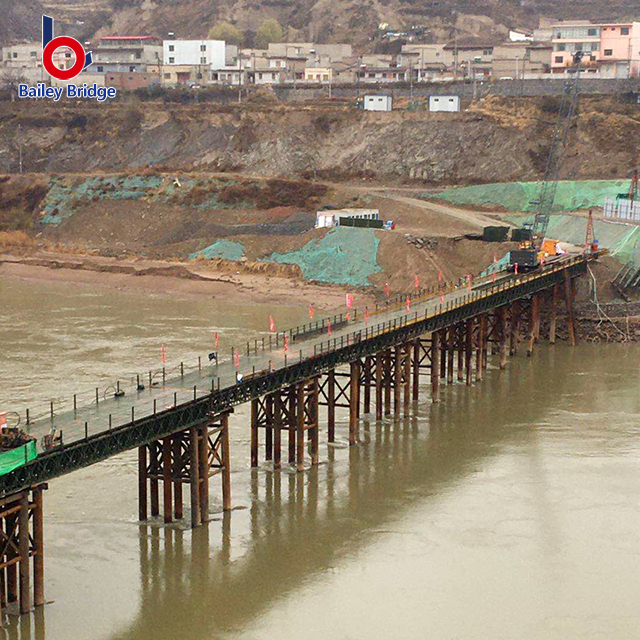
A modern prefabricated temporary bridge represents the peak of rapid-deployment engineering. Manufacturers build these standardized components off-site under strict factory conditions. Crews then transport these modular sections directly to the impacted area. On-site teams assemble the structure using simple pin-jointed connections. This eliminates the need for complex field welding. You typically see these solutions deployed during major disaster relief efforts. They also serve as highly effective construction detours or structural bypasses.
Conversely, the permanent bridge demands a highly customized approach. Engineers design these structures specifically for one unique geographic location. Builders typically utilize cast-in-place concrete. They often rely on heavy fabricated steel girders for support. These traditional structures feature site-specific architectural designs tailored to local aesthetics. They promise multi-generational lifespans frequently exceeding 75 years. However, these permanent installations require extensive deep foundation work.
Time often dictates your project parameters. Design and engineering lead times differ drastically between the two infrastructure categories. Pre-engineered components eliminate months of initial design work. Engineers already know the exact load ratings for each modular section. Teams simply configure the standard parts to fit your specific gap. Permanent structures require extensive geotechnical surveying before any design begins. Engineering teams must secure complex environmental permitting from regulatory agencies. The custom design phase alone routinely takes several years to complete.
Site preparation presents another major contrast. The assembly methods diverge significantly. Crews can launch temporary solutions via the cantilever method. They attach a lightweight launching nose to the front. They push the structure over the existing gap using counterweights. This method requires minimal heavy equipment. You only need basic abutments for structural support.
Permanent installations disrupt the site heavily. They demand intensive environmental control measures. Contractors must install temporary cofferdams to hold back water. They perform deep pile driving to establish unyielding foundations. Pouring concrete requires lengthy curing times before further construction can proceed. Contractors must deploy massive heavy-lift cranes to maneuver custom girders into place.
Pre-engineered designs bypass lengthy custom drafting phases.
Cantilever launching eliminates the need for in-water equipment.
Permanent structures require extensive environmental impact studies.
Deep foundations demand specialized drilling and pile-driving crews.
Financial risk heavily influences infrastructure decisions. You must carefully analyze how each option impacts your budget. Compare the initial procurement costs carefully. A modular steel bridge requires significantly less upfront capital than custom fabrication. Standardized manufacturing lowers the baseline price for components. Off-site fabrication also reduces expensive on-site labor hours.
Examine your procurement models to protect your funding. Capital Expenditure (CapEx) versus Operating Expenditure (OpEx) drives this conversation. You can lease temporary structures. Leasing aligns your costs directly to the exact duration of a project. This approach preserves your critical capital for other municipal needs. Permanent bridges require sunk, unrecoverable capital. This money remains permanently fixed to one specific location.
Consider reusability and asset return on investment. The modular advantage provides immense long-term value. Crews can easily disassemble temporary structures after fulfilling their purpose. Agencies then store the components in standard maintenance yards. Later, teams reconfigure these exact same parts for future emergency responses. They deploy them across entirely different jurisdictions as new needs arise.
Evaluation Criteria |
Modular Solutions |
Permanent Structures |
|---|---|---|
Procurement Model |
Flexible (Lease or Purchase) |
Fixed Purchase Only |
Budget Classification |
Often OpEx (if leased) |
Strictly CapEx |
Asset Reusability |
High (Disassemble and Relocate) |
None (Fixed in Place) |
Initial Capital Outlay |
Low to Moderate |
Extremely High |
Many buyers misunderstand rapid-deployment capabilities. We must dispel the common myth of temporary weakness. The word "temporary" refers strictly to the duration of use. It does not imply structural inferiority in any way. An emergency temporary bridge handles massive commercial weights safely.
Modern modular systems comply strictly with stringent federal and state highway standards. Engineering frameworks demand rigorous testing for all components. These structures reliably meet AASHTO HL-93 standards for heavy commercial traffic. They easily support fully loaded tractor-trailers. They withstand severe seismic activity during earthquakes. They resist extreme wind loads seamlessly during major storm events.
Maintenance realities naturally differ between the two structural formats. Permanent structures require highly scheduled inspections by specialized engineers. Public works departments must perform routine concrete resurfacing. They eventually need to replace degrading expansion joints. Temporary structures feature heavily galvanized steel components. The hot-dip galvanization process ensures parts naturally resist rust and corrosion. However, frequent relocation requires specific inspection protocols. Crews must rigorously check all pin connections between deployments to ensure ongoing safety.
Infrastructure planning rarely forces a strict single choice. Often, sequential implementation offers the smartest path forward. Bridging the gap safely requires strategic foresight. We see agencies combine both solutions constantly. Planners use an emergency structure immediately following a collapse. This restores critical logistics and commercial supply chains within mere weeks.
Risk mitigation becomes much easier using this sequential strategy. You immediately eliminate intense public pressure from frustrated commuters. Engineers take the necessary time to properly design the permanent replacement. Municipalities can then bid the final project competitively. Rushing a permanent design usually leads to expensive change orders later.
Construction phasing benefits heavily from this dual approach. Contractors utilize the rapid-deployment framework as a dedicated haul road. This prevents heavy construction vehicles from destroying local municipal streets. Sometimes, they set the structure up as an adjacent public detour. This strategy accelerates the permanent construction schedule safely. It keeps civilian vehicles completely separated from active construction zones.
Shortlisting the right option demands a clear, objective decision framework. You must evaluate your specific project parameters thoroughly. Review your scenario using these three core criteria.
Urgency of Traffic Restoration: Evaluate your acceptable local downtime. If you need access restored in under six months, rapid deployment wins automatically. Custom builds cannot meet this compressed timeline.
Available Capital and Funding Sources: Review your immediate budget constraints. Federal emergency relief funds often cover rapid-deployment rentals easily. Waiting for permanent capital grants takes years of bureaucratic navigation.
Geotechnical Constraints: Assess the current ground conditions accurately. Determine if the soil can support a permanent deep foundation right now. Unstable ground frequently requires temporary bridging while soil stabilization occurs over time.
Guidance on next steps remains crucial for project success. We highly recommend engaging a specialized engineering firm immediately. Request a rapid site assessment from qualified professionals. Ask them to perform a detailed load-rating requirement analysis for your specific traffic volume.
Choosing your infrastructure path requires analyzing timelines and budgets. Your decision ultimately hinges on traffic urgency and funding availability. A modular approach provides immediate relief through flexible leasing structures. Traditional builds demand massive upfront capital but secure generational access.
You now understand the distinct advantages of both systems. Temporary modular structures remain the unmatched choice for immediate crisis response. They restore vital supply chains when time matters most. Permanent installations remain the ultimate goal for establishing lasting community architecture.
Evaluate your immediate site conditions and long-term municipal goals carefully. We encourage all buyers to request a technical consultation soon. Secure a site-specific engineering feasibility report to guide your final procurement strategy.
A: Yes, many modular steel structures are galvanized for 75+ year lifespans. They can easily serve as permanent solutions if you follow routine maintenance protocols. Municipalities often convert them to permanent use after resolving initial emergencies.
A: They require simpler foundations than permanent bridges. Crews often use precast concrete blocks, heavy timber mats, or existing stable abutments. This streamlined requirement vastly speeds up deployment and reduces overall site preparation costs.
A: Components are delivered on standard flatbed trucks directly to the site. Crews assemble the sections on-site using a cantilever launch method. This highly efficient process often requires only standard-sized excavators or light cranes, avoiding heavy-lift equipment.
