Tel: +86 15262904857 E-mail: overseas@jsbaileybridge.com
- All
- Product Name
- Product Keyword
- Product Model
- Product Summary
- Product Description
- Multi Field Search


Views: 0 Author: Site Editor Publish Time: 2026-07-08 Origin: Site


Disaster recovery operates in a high-stakes environment. Every single minute counts during a crisis. Washed-out infrastructure requires immediate reinstatement. This rapid response allows emergency services, supply chains, and evacuation routes to function properly. Procurement officers and engineering leads face a critical challenge. They must balance extreme urgency against strict load-bearing compliance. Highly unpredictable site conditions further complicate this task.
Navigating these competing priorities demands a structured approach. We designed this guide to provide an evidence-based framework. It helps you evaluate, shortlist, and procure an emergency temporary bridge efficiently. Readers will learn how to align site realities alongside structural capabilities. This alignment minimizes dangerous rollout delays. You will also discover practical strategies to mitigate compliance risks. Following these precise steps ensures a swift and safe deployment during catastrophic events.
Speed vs. Site Reality: Selecting a disaster relief bridge depends heavily on the surviving abutment conditions and the availability of heavy lifting equipment at the isolated site.
Material Pragmatism: Modular steel (like a portable Bailey bridge) offers the highest span-to-weight load capacity, while stress-laminated timber provides rapid, localized solutions for shorter rural gaps.
Compliance is Non-Negotiable: Even temporary structures must meet regional transport standards (e.g., AASHTO HL-93 or local equivalents) to safely support heavy emergency response vehicles.
Total Cost of Deployment: Evaluation must factor in freight logistics, assembly labor, and site preparation, not just the physical bridge materials.
Successful deployment requires careful upfront planning. You must define clear success criteria before ordering any materials. Rushing this assessment phase often leads to incompatible equipment arriving on site.
Washout zones rarely offer pristine access roads. You must evaluate the site logistics carefully. Determine if the approach roads allow flatbed delivery. Check the turning radius available for long transport trucks. Assess whether cranes can operate safely near the gap. Impassable roads render heavy machinery completely useless. If cranes cannot reach the location, your options narrow significantly. In these restricted scenarios, manual-assembly-friendly systems become mandatory. Light components allow crews to build the structure by hand.
Engineers must differentiate between various traffic phases. Immediate light-vehicle evacuation needs differ drastically from sustained logistics. A structural failure during relief efforts is catastrophic. You must plan for heavy construction equipment. Water tankers and military convoys exert immense stress on structures. Always verify compliance against recognized standards like AASHTO HL-93. Meeting these strict standards ensures safe passage for fully loaded emergency vehicles.
You need to clarify the actual definition of "temporary." Establish a realistic timeline for your specific project. Some situations require a bridge for just 30 days. This short window covers immediate triage and evacuation. Other scenarios demand up to three years of continuous service. This extended timeframe allows agencies to fund and rebuild permanent infrastructure. Selecting the right durability prevents mid-deployment replacements.
Floods often scour riverbanks heavily. Post-disaster sites typically feature highly unstable soils. You must factor in the reality of compromised abutments. These unstable banks dictate the need for longer clear spans. Extending the span allows you to reach stable ground safely. Never assume existing foundations remain structurally sound after severe flooding. Engineers must conduct immediate soil bearing tests before finalizing the bridge length.
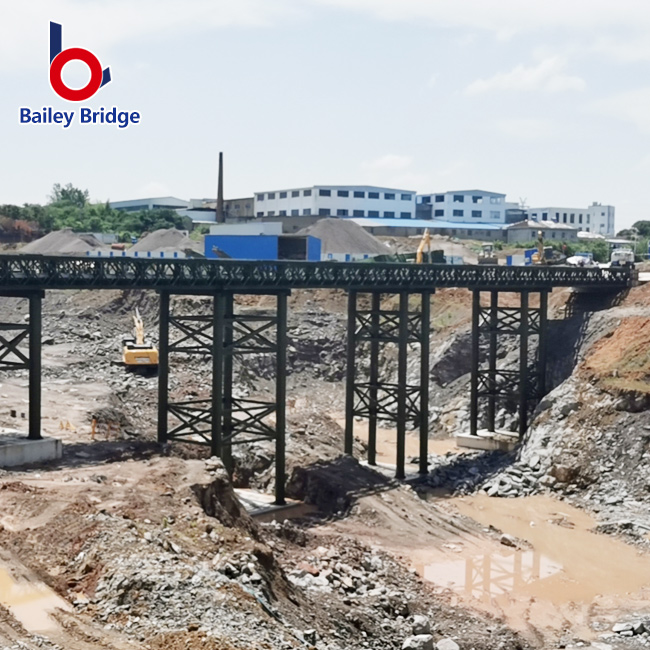
Different disasters require different structural solutions. We categorize these options by material and assembly method. Selecting the right structural approach ensures your timeline remains intact.
Modular steel systems dominate the emergency response sector. A portable Bailey bridge represents the industry standard for extreme conditions.
Best for: Heavy loads, long clear spans, and extended temporary use.
Evaluation: These systems are highly standardized and structurally reliable. You can launch them from one side of the gap. This cantilever method requires no in-water piers.
Trade-offs: Pin-and-panel assembly requires trained supervision. The upfront logistics weight remains higher than timber alternatives.
Best Practice: Always deploy a lightweight launching nose. This component ensures a safe cantilever push across wide rivers.
Timber provides a highly viable alternative for specific scenarios.
Best for: Shorter spans, rural access roads, and environmentally sensitive deployment zones.
Evaluation: SLT utilizes readily available materials. Crews can assemble these structures using lighter equipment. They offer excellent fatigue resistance for temporary applications.
Trade-offs: Maximum span lengths remain strictly limited. Severe moisture degrades timber if deployed long-term without proper chemical treatment.
Common Mistake: Failing to apply protective deck wear surfaces leads to rapid timber degradation under heavy truck traffic.
These rigid systems offer incredible speed under the right conditions.
Best for: Rapid installation where heavy cranes have clear access and abutments are fully intact.
Evaluation: These units require minimal on-site assembly time. They arrive ready for immediate drop-in-place deployment.
Trade-offs: It is impossible to deploy them in terrain restricting overhead clearance or heavy transport access.
System Type | Ideal Span Range | Equipment Needed | Installation Speed |
|---|---|---|---|
Modular Steel Panel | Medium to Long | Rollers, Loaders (No Crane needed) | Moderate (Days) |
Stress-Laminated Timber | Short | Light Machinery | Fast (Hours to Days) |
Pre-Engineered Beam | Short to Medium | Heavy Cranes | Very Fast (Hours) |
Selecting the right system involves evaluating several crucial dimensions. These operational factors determine exactly how quickly you can restore access to isolated communities.
Agencies strictly enforce engineering standards during emergencies. You must ensure the provider supplies certified engineering drawings. These blueprints must meet federal or local emergency management guidelines. Adherence ensures your project remains eligible for FHWA or FEMA reimbursements. Substandard structures create immense liability for procurement officers. Always request stamped documentation before accepting delivery.
Measure the freight footprint carefully. You need to calculate the shipping requirements precisely. Determine how many standardized containers or flatbeds you need per 100 feet. Smaller footprints accelerate delivery speeds significantly. Compact shipping profiles prevent logistical bottlenecks on narrow mountain roads. High transport density ensures more bridge panels arrive per truckload.
Assess the required assembly tooling beforehand. Does the system demand specialized hydraulic tools or on-site welding? Standard hand tools and steel pins reduce assembly complications immensely. Predictable, low-skill assembly lowers overall deployment risk. It allows you to utilize local labor pools effectively. A typical modular panel system only requires a crew of six to eight personnel.
Agencies should evaluate system modularity for future disasters. You might need to dismantle the structure eventually. Can crews easily unpin, inspect, and store components? A reusable disaster relief bridge adds significant strategic value. Many regional departments stockpile these components for rapid future deployment. This readiness transforms reactive panic into proactive disaster management.
Even the best engineering plans face severe real-world challenges. Identifying these risks early prevents catastrophic rollout failures and keeps your recovery schedule on track.
Bridge structures rarely fail on their own. The most common failure point involves the substructure. Placing temporary bearing plates on compromised, water-logged soils invites disaster. Engineers must thoroughly assess ground stability first. Using dynamic cone penetrometers helps verify soil bearing capacity. You must often excavate back to undisturbed earth. Placing heavy steel on mud will cause severe settlement.
Nature frequently ignores emergency construction schedules. High winds and secondary flooding can halt crane operations entirely. Systems allowing incremental, ground-level pushing mitigate weather-related delays. Launching rollers keep progress moving forward during moderate storms. Always monitor local weather patterns closely during the assembly phase. Have securing mechanisms ready if floodwaters suddenly rise.
A bridge on paper remains useless during an emergency. Components must be readily available for immediate shipping. Procurement teams must verify actual physical inventory levels. Check the geographic proximity to the disaster zone before committing. Delays in shipping critical pins or bolts will halt the entire project. Demand proof of inventory from your supplier.
Temporary structures demand strict traffic management protocols to ensure public safety.
Establish clear single-lane operation signals if the bridge lacks dual-lane width.
Deploy specific approach signage to warn drivers of reduced speeds.
Install robust crash barriers at both approach zones.
Factor all safety installations into the overall deployment timeline.
Decision-makers need a clear logic path for shortlisting solutions. Follow this framework to finalize your procurement strategy and initiate rapid deployment.
Match your site conditions directly to the appropriate technology.
If heavy equipment access is blocked and spans are long: Shortlist a modular pin-connected steel system. These allow manual assembly and cantilever launching.
If heavy cranes are on-site and the gap is short: Shortlist prefabricated drop-in steel or timber decks. These maximize installation speed when machinery can access the site easily.
Decide your procurement model based on capital availability and future risk profiles. Leasing makes sense for localized, one-off disaster events. It removes the burden of long-term storage and maintenance. Purchasing proves highly viable for regional transportation departments. Buying components allows agencies to build a reliable rapid-response stockpile. This proactive approach ensures immediate readiness for future climate events.
Do not issue a purchase order blindly. Request comprehensive technical specification sheets immediately. Verify load ratings against your specific emergency vehicle weights. Demand a precise logistics and freight timeline from the vendor. Ensure they guarantee delivery dates in writing. Consult your engineering lead to confirm all site constraints match the product capabilities perfectly.
Procuring an emergency temporary bridge requires balancing immediate deployment speed against uncompromising structural integrity. Careful assessment of site access prevents costly mid-deployment failures. You must thoroughly evaluate load demands and material capabilities, whether choosing steel modular systems or timber. Always prioritize solutions featuring proven compliance with national safety standards. We highly encourage decision-makers to consult directly with specialized engineers. This collaboration ensures you match exact span requirements with available inventory. Taking these precise actions guarantees a faster, safer recovery for affected communities.
A: Standard configurations scale easily to meet heavy highway legal loads. By stacking panels in Single-Single or Double-Double arrangements, they handle extreme weights. These modular systems routinely achieve HS-20 or HL-93 load ratings depending on the span length. This scalability ensures they safely support heavy emergency response vehicles.
A: Yes. Crews utilize a cantilever launch method for modular bridges. They attach a lightweight launching nose to the main structure. Rollers push the bridge across the gap from one side. This technique allows safe deployment across active floodwaters without requiring any intermediate in-water piers.
A: Deployment timelines range from a few days to several weeks. Physical assembly of modular panels happens rapidly. However, preparing the site and securing logistics usually takes longer than the actual assembly. Clearing debris and stabilizing abutments dictate the true timeline of the project.
A: Yes, but strict conditions apply. Adherence to specific engineering and safety standards is typically required for FEMA or FHWA reimbursement. You must utilize certified solutions featuring stamped engineering drawings. Failing to meet these national load and safety standards jeopardizes your disaster relief funding eligibility.
