Tel: +86 15262904857 E-mail: overseas@jsbaileybridge.com
- All
- Product Name
- Product Keyword
- Product Model
- Product Summary
- Product Description
- Multi Field Search


Views: 0 Author: Site Editor Publish Time: 2026-08-04 Origin: Site


Choosing a modular bridge is not merely a basic structural decision. You are making a critical investment in rapid deployment, load-bearing reliability, and lifecycle predictability. Project managers and field engineers routinely face conflicting claims about modular bridge durability. They often struggle to verify manufacturer specifications regarding steel grades, anti-corrosion treatments, and decking options under heavy dynamic loads. Making the wrong choice leads to frequent maintenance, unsafe crossings, and budget overruns.
Modern modular bridge manufacturing relies heavily on strictly regulated, high-tensile materials. Navigating these exact material specifications ensures you align the crossing design with site-specific compliance requirements. This diligence helps you meet rigorous AASHTO or Eurocode frameworks while remaining within budget constraints. In this guide, you will learn how to evaluate the core truss materials and assess protective surface coatings. We will also explore specialized decking alternatives and critical connector hardware to help you procure a highly reliable spanning system.
Core Structure: High-tensile steel is the non-negotiable standard for the main trusses, offering the necessary strength-to-weight ratio for modular assembly.
Surface Protection: Hot-dip galvanization provides the most reliable long-term ROI against corrosion compared to traditional painted finishes, especially in harsh environments.
Decking Variability: Deck materials range from anti-skid steel plates to treated timber, requiring a trade-off analysis between upfront cost, vehicle traction, and maintenance frequency.
Procurement Logic: Evaluating a steel bailey bridge requires verifying mill test certificates, checking alloy compositions for connecting pins, and matching material fatigue ratings to expected daily traffic.
The foundational material strictly dictates the total load capacity of your crossing. It significantly impacts transport logistics and governs the overall erection speed. Historically, engineers built temporary structures using standard mild steel. These early materials featured a lower yield strength, making the panels heavy and cumbersome to handle.
Today, you must specify high-yield structural steels for any reliable bailey bridge. Standard modern grades include Q345 and Q460 steel. You might also encounter equivalent ASTM designations like A572 Grade 50. Higher yield strength allows manufacturers to design much lighter modular panels. They achieve this weight reduction without sacrificing the overall load rating. Modern engineered trusses easily support demanding HL-93 or HS20-44 highway standards.
Lighter, high-strength steel reduces the need for heavy lifting equipment on your job site. Smaller cranes and smaller crews can handle the components efficiently. This reality directly lowers your daily installation costs and accelerates the project rollout time. You can often deploy a complete span in a matter of days rather than weeks.
However, you face specific procurement risks in the current market. Some aggressive suppliers utilize uncertified, lower-grade steel to cut their manufacturing costs. This substitution can lead to dangerous micro-fractures under continuous dynamic loading. Heavy trucks bouncing across the span create severe stress cycles. To mitigate this risk, you must always demand traceable mill certificates. These documents prove the exact chemical composition and yield strength of the steel before shipment.
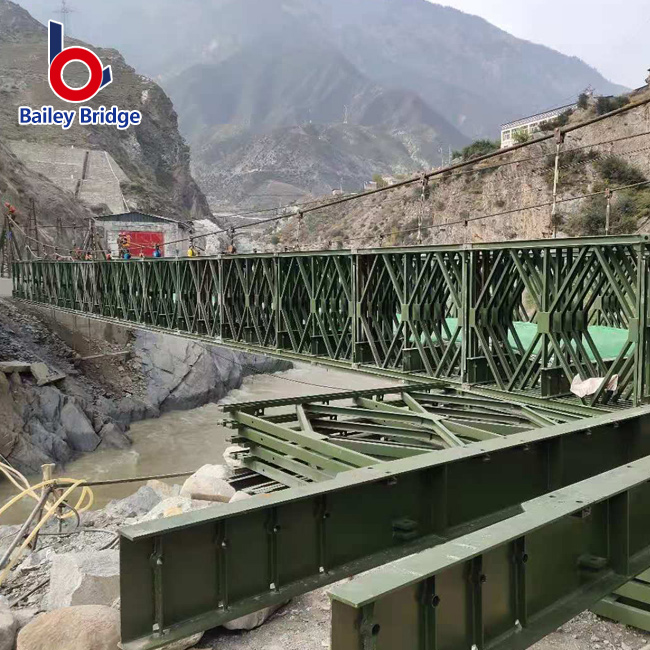
The primary failure point for temporary and permanent modular bridges is environmental degradation. Continuous exposure to moisture, road salts, and fluctuating temperatures destroys raw steel quickly. Evaluating the coating material is essential for projecting long-term viability and planning your maintenance schedules.
Hot-dip galvanization provides the ultimate defensive barrier. This method involves a metallurgical bonding process. Fabricators submerge the steel components into a vat of molten zinc at roughly 450 degrees Celsius. The zinc binds directly to the steel substrate. It creates a thick, impenetrable exterior shell. You will pay a higher upfront cost premium for proper galvanization. However, this process eliminates recurring maintenance painting over a 30 to 50-year lifespan. The zinc even acts sacrificially to protect small scratches from rusting.
Industrial epoxy and polyurethane paints offer a secondary option. You typically use high-performance paint systems for short-term temporary deployments. Engineers also specify paint for strict aesthetic requirements where a specific color is mandated. Paint systems perform adequately in non-corrosive inland environments. A typical system involves a zinc-rich primer, an epoxy intermediate coat, and a UV-resistant polyurethane topcoat.
You must carefully assess the environmental deployment conditions to justify your coating selection. Coastal areas, saline environments, industrial chemical exposure, and high-humidity zones demand hot-dip galvanization. Dry inland areas might allow for high-quality painted finishes.
Coating Application Comparison
Coating Type | Application Process | Expected Lifespan | Best Environment | Maintenance Needs |
|---|---|---|---|---|
Hot-Dip Galvanized | Molten zinc immersion | 30–50+ years | Coastal, high humidity, saline | Virtually none |
Industrial Paint | Multi-coat spray application | 10–15 years | Dry inland, temporary sites | Periodic touch-ups, repainting |
The deck material directly impacts user safety and vehicle traction. It also controls ambient noise levels and dictates your ongoing maintenance schedules. Selecting the right decking for your baily bridges requires matching the material to the anticipated traffic type.
Orthotropic steel decking stands as the premium choice for heavy commercial traffic. It is ideal for permanent installations. Manufacturers construct these decks by welding steel plates to longitudinal ribs. This creates an incredibly stiff and durable surface. To prevent vehicles from sliding in wet conditions, suppliers typically coat these decks with anti-skid aggregates. They embed tough materials like bauxite into a thick layer of epoxy polyurethane.
Treated timber decking offers a highly cost-effective alternative. You frequently see timber used for rural, temporary, or lighter-duty applications. Timber reduces the initial capital expenditure significantly. However, timber introduces a distinct implementation risk. Wood has a high maintenance requirement. It remains susceptible to rot, fungal decay, and physical wear from tire chains. Frequent timber replacement causes traffic disruptions and requires ongoing labor budgets.
Composite or FRP (Fiber Reinforced Polymer) decking represents an emerging modern alternative. FRP combines fiberglass strands with strong polymer resins. It offers exceptional corrosion resistance and extremely low weight. It will never rot or rust. However, you will face a substantially higher initial capital expenditure when specifying FRP.
You should utilize a clear decision matrix to match your deck material effectively. Base your choice on the following critical factors:
Average Daily Traffic (ADT): High traffic demands orthotropic steel. Low traffic can utilize timber.
Expected Axle Loads: Heavy logging or mining trucks require steel or heavy-duty composite decking.
Available Maintenance Budgets: If future maintenance funding is uncertain, invest in steel decking upfront to avoid costly timber replacements.
A modular structure is only as strong as its weakest connection. The materials used for the physical joints determine the safety and structural integrity of the entire span. High-quality panels mean nothing if the connector pins shear under heavy loads.
Panel pins, often called shear pins, lock the main truss segments together. Manufacturers must forge these pins from ultra-high-strength alloy steel. A widely accepted material standard is 30CrMnTi or an equivalent high-tensile alloy. This specific steel alloy contains chromium, manganese, and titanium. It allows the pin to achieve extreme core toughness while maintaining a hardened outer surface. These pins endure immense horizontal shear forces every time a vehicle crosses the deck. Material hardness and fatigue resistance are absolutely critical to prevent catastrophic joint failure.
Construction crews also rely on high-strength bolts and transom clamps. These fasteners secure the crossbeams and decking to the main trusses. You require these fasteners for rigid connections that actively prevent sway and harmful vibration. When specifying these parts, you must highlight the necessity of using galvanized or appropriately coated hardware. If you bolt raw steel fasteners onto galvanized panels, galvanic corrosion occurs. The dissimilar metals react chemically in the presence of moisture, causing rapid rusting at the most critical stress points.
You must shift your focus from merely reading technical specifications to performing rigorous vendor evaluation. Knowing the right materials is only half the battle. You must ensure what you actually order is what arrives on your construction site.
Ensure the materials meet strict international bridge design codes. Reliable manufacturers will certify their products against AASHTO LRFD standards in North America. They may also use BS 5400 or Eurocode standards internationally. Ask the supplier to provide documented proof of compliance with these frameworks.
You should also mandate independent testing. Prioritize third-party non-destructive testing (NDT) on all structural welds. Inspectors use ultrasonic testing or magnetic particle inspection to find hidden flaws inside the welds. They also provide raw material composition verification. This prevents suppliers from substituting cheap steel midway through production.
Follow a strict shortlisting logic when evaluating a steel bailey bridge manufacturer:
Request comprehensive material data sheets and mill test reports upfront before signing any contracts.
Evaluate the long-term financial impacts by comparing cheaper painted mild steel against galvanized high-tensile steel over a 30-year span.
Assess the vendor’s historical defect rate on past projects.
Review the exact warranty terms covering material integrity and corrosion resistance.
Advise your engineering and procurement teams to initiate a site-specific load and environmental assessment immediately. You must gather precise data on soil salinity, humidity, and maximum vehicle weights prior to requesting vendor RFPs.
The operational reliability of a modular bridge hinges entirely on a specific triad of materials. You need high-tensile steel framing to support the loads. You need robust anti-corrosion coatings to survive the environment. Finally, you need situationally appropriate decking to ensure safe vehicle traction. Balancing these three elements guarantees a successful installation.
Always maintain a skeptical mindset during procurement. Aggressively low bids often hide dangerous compromises in steel quality. They might also indicate inadequate galvanization thickness or inferior connecting pins. Cutting corners on these materials compromises the safety of the entire crossing.
Encourage your decision-makers to act cautiously. Consult with certified structural engineers before making a final purchase. Reach out exclusively to vetted modular steel bridge manufacturers for a project-specific material consultation. Proper material selection ensures your bridge will perform reliably for decades.
A: No. While the fundamental engineering concept remains similar, modern iterations utilize significantly stronger materials. Manufacturers today specify high-yield steel alloys like Q345 or Q460. They also apply advanced corrosion-resistant coatings. These upgrades make modern modular systems fully suitable for supporting heavy modern highway loads safely.
A: With proper hot-dip galvanization and routine maintenance, permanent installations can easily exceed 50 to 75 years of service. Painted versions or temporary setups may require major structural overhauls and repainting every 10 to 15 years, depending heavily on local environmental conditions.
A: Yes. The modular design inherently allows for future material upgrades. You can swap treated timber out for anti-skid steel decking later. However, you must first verify that the supporting transoms are structurally rated to handle the increased dead load of the new steel panels.
A: No. "Baily bridges" is simply a common spelling variation. Both terms refer to the exact same pre-engineered, modular steel truss system. Reliable and vetted manufacturers will apply the exact same rigorous material standards regardless of the specific spelling you use during your procurement searches.
