Tel: +86 15262904857 E-mail: overseas@jsbaileybridge.com
- All
- Product Name
- Product Keyword
- Product Model
- Product Summary
- Product Description
- Multi Field Search


Views: 0 Author: Site Editor Publish Time: 2026-10-01 Origin: Site


Rural regions face systemic exclusion from global economic and social networks. Severe geographical barriers and impassable waterways keep these vulnerable communities entirely isolated. Traditional infrastructure models rely heavily on massive capital investments, specialized heavy machinery, and multi-year project timelines. These rigid methods frequently fail in remote locations where communities urgently need rapid, reliable alternatives. You need a practical, structurally sound solution to bridge this expanding rural infrastructure gap. Modern engineering positions the modular bailey bridge as the ideal answer. This system has successfully evolved far beyond its temporary military origins. It now serves as robust, permanent civilian infrastructure around the globe. In this article, you will learn how these prefabricated structures overcome steep logistical hurdles. We will explore key engineering standards, deployment strategies, and their profound socio-economic impacts to help guide your next rural development project.
Rapid Deployment: Prefabricated modular designs drastically reduce project timelines from years to weeks.
Logistical Viability: Components are designed for standard freight transport and manual assembly, eliminating the need for heavy cranes in remote locations.
Standardized Compliance: Modern steel bailey bridges meet international highway and structural safety standards for both temporary and permanent installations.
Predictable Lifecycle Costs: Galvanized components and predictable maintenance schedules offer transparent long-term financial modeling for government and NGO budgets.
Building conventional bridges in isolated areas presents overwhelming challenges. Site accessibility often ranks as the most significant hurdle for civil engineers. Heavy concrete mixer trucks and massive hydraulic cranes simply cannot navigate unpaved, mountainous, or highly degraded rural roads. When project managers attempt to force traditional machinery into these tight corridors, they inevitably damage existing local pathways.
Capital and timeline overruns consistently plague traditional rural builds. Pouring concrete requires strict climate control and extended curing times. Unpredictable weather easily ruins a concrete pour, causing compounding delays. Furthermore, specialized labor shortages in remote villages force contractors to import expensive external crews. Complex site preparation demands deep excavation and extensive formwork, which inflates traditional bridge budgets far beyond initial estimates.
You must also consider the stringent funding reality of global development. International financing bodies, such as the Asian Development Bank (ADB) and the European Investment Bank (EIB), scrutinize project proposals heavily. These institutions require structural solutions delivering immediate socio-economic impact. They demand measurable returns on investment (ROI) and predictable financial modeling. Traditional concrete spans often stretch funding timelines to the breaking point. This delay leaves vulnerable communities stranded for years while waiting for essential infrastructure completion.
Access limitations: Impassable dirt roads block standard construction freight.
Weather dependencies: Concrete works halt entirely during heavy rain or freezing conditions.
Labor constraints: Sourcing skilled welders and riggers locally proves nearly impossible.
Budget bloat: Extended timelines naturally drain project contingency funds.
Engineers value modular solutions for their exceptional adaptability in unpredictable environments. Modularity allows construction teams to scale a steel bailey bridge to fit precise site conditions. Teams use standard, interchangeable components to adjust both span lengths and load capacities. Depending on the traffic demand, you can configure these structures in multiple ways. A Single-Single configuration supports lighter loads over shorter spans. Meanwhile, Double-Single or Double-Double layouts provide massive structural reinforcement for heavy commercial freight.
Examining the features-to-outcomes matrix reveals why these structures excel globally. First, standardized panels and transoms guarantee a highly predictable shipping footprint. Planners know exactly how many shipping containers they need. Second, the ingenious pin-and-hole assembly method largely eliminates the need for on-site welding. Local crews assemble the bridge using fundamental hand tools and basic mechanical leverage. Third, adaptable load classes ensure the structure grows alongside the local economy. A bridge might initially handle light pedestrian and livestock traffic. Later, authorities can upgrade the exact same framework to support heavy agricultural transport trucks.
Material integrity sets prefabricated steel modules apart from rudimentary local options. Many isolated communities rely on locally sourced timber or basic masonry to cross rivers. These materials decay rapidly in high-stress, high-fatigue environments. Wood rots, and unreinforced masonry cracks under dynamic vehicle loads. High-yield steel components offer superior tensile strength and fatigue resistance. They endure harsh seasonal flooding and heavy daily usage without compromising passenger safety.
Below is a simple comparison chart illustrating material performance differences in rural settings.
Infrastructure Material | Lifespan (Average) | Maintenance Needs | Deployment Speed | Load Flexibility |
|---|---|---|---|---|
Local Timber | 5-10 Years | High (Frequent replacement) | Moderate | Very Low (Light loads only) |
Standard Masonry | 20-40 Years | Moderate (Crack repairs) | Slow | Low to Moderate |
Modular Steel | 50+ Years | Low (Periodic inspections) | Very Fast | High (Easily upgradable) |
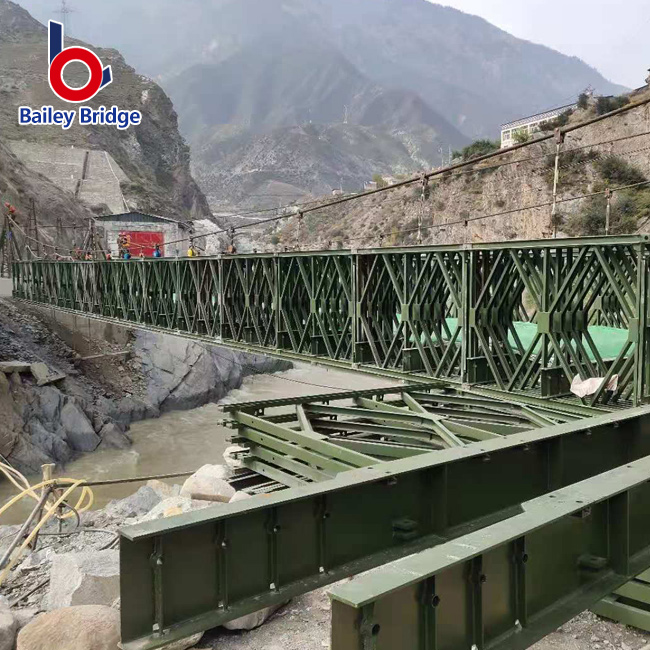
Deploying bridges in rural zones does not mean abandoning rigorous engineering standards. Modern prefabricated bridges strictly align with global structural metrics. Institutions like the Federal Highway Administration (FHWA) outline comprehensive guidelines for load-bearing capacities and structural deflection limits. Certified modular bridge manufacturers test their steel components meticulously to ensure they meet these global benchmarks. When a local government invests in this infrastructure, they receive a fully compliant, engineered solution rather than a temporary fix.
Lifecycle Assessment (LCA) data further validates the investment. Planners often mistakenly view modular bridges as temporary emergency tools. While they excel in disaster relief, heavy-duty steel variants function flawlessly as permanent infrastructural installations. Expected durability spans several decades. Proper surface treatments prevent premature degradation, making them structurally viable for generations.
Handling dynamic loads remains critical in exposed rural topographies. High winds, torrential water currents, and heavy commercial vehicles generate immense stress. The structural truss configurations efficiently distribute this vehicular stress across the entire framework. This distribution prevents localized fatigue. Furthermore, the open-web design allows high winds and floodwaters to pass through the structure safely, greatly reducing the risk of catastrophic bridge collapse during extreme weather events.
Project managers often skip detailed geotechnical soil assessments when rushing a deployment. You must evaluate the abutment soil bearing capacity. Even the strongest steel truss will fail if the underlying riverbank collapses under the new foundational pressure.
Getting materials to a remote job site requires precise logistical planning. Modular components feature a highly compact shipping footprint. Manufacturers containerize baily bridges for standard maritime shipping and cross-country rail freight. Once the containers reach a regional hub, teams break the shipments down. They load individual steel panels onto standard flatbed trucks or even smaller utility vehicles for localized "last-mile" transport over difficult terrain.
On-site assembly dynamics highlight the true genius of the design. You can choose between manual labor and mechanized assembly based on site constraints. If cranes cannot access the site, a dedicated team of manual laborers can piece the structure together safely. However, this process requires trained site supervision. Experienced engineers must manage local labor teams effectively to ensure pin alignments and torque specifications remain absolutely precise.
Contractors typically employ the cantilever launching method to cross rivers without entering the water. This technique is highly efficient and safeguards local marine ecosystems.
Prepare the launch site: Construct temporary rollers on the near bank abutment.
Assemble the launching nose: Connect a lightweight, upward-tilted skeleton frame to the front of the main bridge structure.
Push the structure forward: Use mechanical winches or vehicle traction to slowly push the assembled sections over the rollers toward the far bank.
Engage the far bank: The launching nose lands on the receiving rollers, supporting the heavier main bridge spanning the gap.
Dismantle the nose and lower the bridge: Remove the temporary front frame and carefully jack the main bridge down onto its permanent bearings.
Mitigating environmental risks guarantees long-term success. High-humidity environments and coastal rural areas introduce severe steel corrosion risks. Standard painted finishes offer basic protection but require frequent reapplication. Conversely, hot-dip galvanized coatings chemically bond zinc to the steel components. This galvanization process creates an incredibly tough barrier against rust, drastically reducing ongoing maintenance burdens for rural municipalities.
A new bridge immediately activates the local rural economy. Post-installation success criteria typically focus on drastically reduced transit times. Farmers who previously spent an entire day navigating treacherous detours can now transport agricultural goods to urban markets in mere hours. This speed prevents perishable crops from spoiling. It also allows rural producers to command better prices for their fresher goods.
Critical access improves community welfare instantly. Impassable rivers often block ambulances and medical personnel from reaching isolated villages. A permanent crossing guarantees uninterrupted healthcare access regardless of the season. Similarly, educational attendance rates surge when children no longer face dangerous river crossings on their daily commute to school.
These tangible outcomes align perfectly with institutional funding goals. International development grants frequently approve standardized modular bridges because they offer rapid implementation transparency. Donors can physically see the assembled infrastructure within weeks of funding approval. The high success rates of these projects provide donors with the confidence they need to approve future rural development grants.
Procuring a modular bridge demands clear technical specifications. You must accurately define your baseline requirements before contacting manufacturers. Start by measuring the clear span length from abutment to abutment. Next, determine the required load capacity. Do you need to meet HS20 standards for standard trucks, or do you require HL93 standards for heavy commercial freight? Finally, decide between single-lane and multi-lane requirements based on projected daily traffic volumes.
Evaluating manufacturers requires thorough due diligence. You should strictly shortlist suppliers holding recognized international certifications. Request certified material testing reports to verify steel yield strengths. Additionally, investigate their past performance. A manufacturer must prove their structures perform reliably in climates similar to your specific rural deployment zone.
Your next steps involve compiling comprehensive site survey data. You cannot request accurate engineering designs or financial quotes without this information.
Survey Data Required | Why You Need It | Engineering Impact |
|---|---|---|
Topographical Mapping | Identifies bank slopes and elevation changes. | Determines abutment height and approach road grading. |
Geotechnical Soil Reports | Measures earth bearing capacity. | Dictates the size and depth of concrete foundations. |
Hydrological Data | Tracks historical flood levels and water velocity. | Ensures the bridge deck remains above maximum flood lines. |
Always over-communicate your site limitations. If local roads restrict truck lengths to under 10 meters, tell your manufacturer immediately. They will pack and optimize the steel components to fit your exact logistical constraints.
Modular steel bridges provide a massive strategic advantage for global rural development. They offer an optimal balance of strict engineering rigor, incredibly rapid deployment, and financial predictability. By eliminating the need for heavy construction equipment and lengthy concrete curing times, these structures bypass traditional infrastructure bottlenecks entirely. They connect isolated communities to critical economic markets, healthcare facilities, and educational institutions in weeks rather than years.
Remember, successful deployment relies on diligent preparation. You must conduct rigorous upfront site assessments, including soil and hydrological surveys. You must also adhere to structural maintenance protocols, such as routine bolt inspections and corrosion monitoring, to maximize the structure's lifespan.
Do not let geographical barriers stall your regional development goals. Encourage your infrastructure planners and project managers to consult with specialized technical engineering teams today. Request preliminary site assessments and span feasibility studies to begin bridging the gap for your rural communities.
A: When properly maintained and treated with hot-dip galvanization, a modular steel bridge easily exceeds a 50-year lifespan in permanent civilian installations. Routine inspections of pins, bolts, and bearings ensure long-term structural integrity.
A: Modular steel bridges generally require lower upfront capital for remote sites because they eliminate heavy machinery rentals, complex formwork, and imported specialized labor. Their predictable parts list also prevents the budget overruns commonly seen in traditional concrete builds.
A: Yes. The modular design allows engineers to reinforce existing structures. By adding extra steel truss panels or transitioning from a Single-Single to a Double-Single configuration, you can significantly increase the load-bearing capacity without replacing the entire bridge.
A: Routine maintenance involves visually inspecting galvanized coatings for scratches, checking the torque on deck bolts, and lubricating structural pins. Catching minor wear early prevents rust formation and extends the operational safety of the bridge.
A: No. You can assemble and launch modular steel components using manual labor, basic hand tools, and simple launching rollers. This eliminates the necessity for heavy hydraulic cranes, making it ideal for inaccessible rural sites.
