Tel: +86 15262904857 E-mail: overseas@jsbaileybridge.com
- All
- Product Name
- Product Keyword
- Product Model
- Product Summary
- Product Description
- Multi Field Search


Views: 0 Author: Site Editor Publish Time: 2026-09-21 Origin: Site


Project delays in emergency relief, remote construction, or military deployment translate directly to financial loss. Time represents a critical bottleneck for infrastructure access. Every wasted day stalls supply chains and halts vital operations. While modular design allows for rapid deployment, the actual timeline of assembling a bailey bridge is rarely absolute. It is dictated by site readiness, span requirements, and logistical execution.
Planners often confuse physical assembly time with total project duration. This misunderstanding leads to misallocated resources and missed deadlines. We provide procurement officers, engineers, and project managers with an evidence-based timeline breakdown. You will uncover the exact variables that accelerate or delay deployment.
By understanding these core factors, you can forecast schedules accurately. This guide empowers your team to plan better site preparation and component staging. You will learn how to avoid common pitfalls that derail infrastructure projects.
Standard, single-span bailey bridges can often be assembled and launched in 1 to 5 days by an experienced crew, assuming site preparation is complete.
Complex or multi-span structures may require several weeks, factoring in custom abutments and heavy equipment positioning.
Site preparation (foundation work, abutment curing) and logistics (component delivery to remote sites) frequently consume more time than the physical assembly.
Selecting a pre-engineered steel bailey bridge significantly reduces on-site welding and fabrication risks, standardizing the installation timeline.
You must evaluate success criteria carefully before estimating schedules. Define what "built" means for your specific project. Physical assembly time differs vastly from total project duration. Total time includes site prep, abutment curing, and final inspections. Below, we break down expected timelines by scale. These estimates assume standard site conditions and adequate crew sizes.
For emergency scenarios, speed is paramount. Disaster relief teams rely heavily on these quick deployments. You can often restore access in a matter of days.
Estimated timeframe: 12 to 72 hours.
Ideal conditions: Pre-leveled ground and a highly trained 10-15 person crew.
You can often complete manual assembly with minimal crane assistance. Standardized pinned connections make this rapid pace possible. Crews simply lock the panels into place. A common mistake here is neglecting the staging area. If parts arrive disorganized, your 12-hour build quickly turns into a three-day struggle.
Larger gaps require more deliberate engineering. You cannot rush the physics of long-span structures. Safety protocols demand a measured approach.
Estimated timeframe: 5 to 14 days.
Variables: You will need incremental launching and roller systems.
These projects might also require intermediate pier construction. The cantilever method ensures safe placement across wider ravines. Crews build a launching nose to prevent the structure from tipping. Best practices dictate using mechanical cranes for these spans. Heavy machinery accelerates the lifting of heavy transoms and deck plates safely.
Permanent or high-capacity infrastructure demands strict oversight. These structures often carry commercial mining trucks or heavy logistics vehicles.
Estimated timeframe: 2 to 4+ weeks.
Variables: Reinforced chords and complex decking installations.
Rigorous compliance and load testing phases add essential days to the schedule. You must ensure the structure meets standard highway load ratings like AASHTO standards. Engineers conduct detailed deflection tests before opening the roadway. Do not shortcut these final verification steps.
Project Timeline Summary by Span Length:
Project Scale | Span Length | Estimated Assembly Time | Primary Requirement |
|---|---|---|---|
Emergency / Short | Under 30 meters | 12 - 72 hours | Level ground, trained manual crew |
Medium / Long | 30 - 60+ meters | 5 - 14 days | Launching rollers, crane assistance |
Multi-Span / Heavy | Over 60 meters | 2 - 4+ weeks | Intermediate piers, strict load testing |
Many factors influence your actual deployment speed. You must account for these variables during the early planning phase. Ignoring them leads to massive budget overruns. Real-world conditions rarely match perfect textbook scenarios.
Transporting modular steel parts affects your start date directly. Remote or rugged terrains complicate logistics severely. You cannot build what you do not have on site. Delivery delays impact the entire project timeline. Always secure reliable freight partners. Verify that access roads can handle flatbed trucks carrying heavy steel panels. If the final mile requires helicopter drops, factor that into your schedule.
Assembly cannot start until abutments are cured and load-bearing. Soil stability dictates how much foundation work you need. You must prepare secure, level abutments. Leveling a launching plain is also mandatory. These geotechnical realities often take longer than the steel assembly itself. Soft clay soils require deep piling before you can pour concrete pads. Solid bedrock allows for much faster foundation prep.
A specialized bridge-building unit works much faster than general local contractors. Experienced crews understand the pinning sequence instinctively. They know how to avoid common alignment errors. Standardized hand tools allow basic assembly, but heavy machinery assistance accelerates progress significantly. An experienced foreman prevents teams from installing panels backward. This expertise alone saves days of rework.
You cannot control the environment. High winds make crane operations extremely hazardous. Heavy rain turns staging areas into deep mud, halting forklifts. Freezing temperatures slow down manual pinning processes and affect worker stamina. Always build weather contingencies into your installation schedule. Monitor local forecasts closely leading up to the launch day.
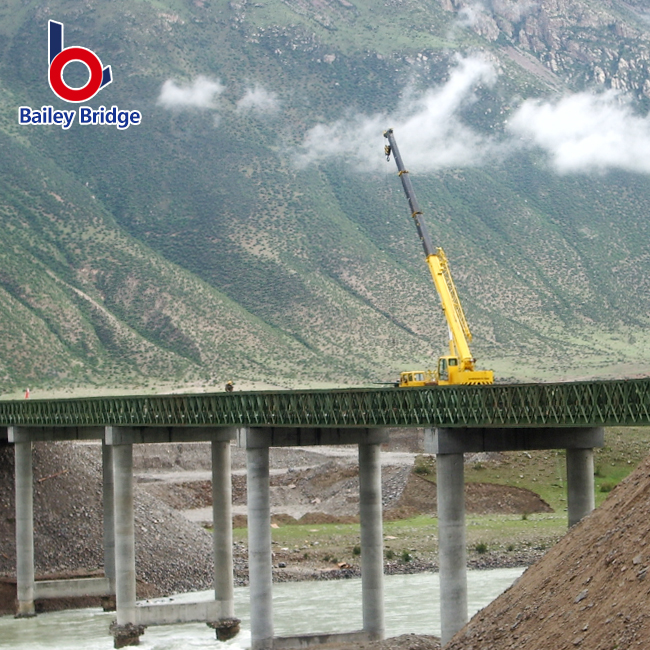
Understanding the assembly phases helps you identify potential bottlenecks. We can divide the physical construction into four distinct stages. Monitoring these stages keeps your project on track. Each phase requires specific tools and attention to detail.
You must organize panels, transoms, and pins systematically. Place them on the launching bank in the correct installation order. Proper staging prevents workflow bottlenecks later on. Scrambling for buried parts wastes valuable daylight hours. A best practice is assigning dedicated inventory managers to the staging zone. They ensure the main assembly crew never waits for the next steel component.
Crews build a lightweight skeleton called the launching nose. It allows the structure to span the gap without tipping forward. You must also align the launching rollers precisely on the abutments. Misaligned rollers cause massive delays during the pushing phase. Engineers must verify roller elevations with laser levels. A few millimeters of error here creates massive friction later.
This is the cantilever push across the gap. It is a slower, precision-heavy phase. Crews must perform constant alignment checks as the structure moves. Rushing this stage risks equipment damage or catastrophic structural failure. You usually push the structure using heavy machinery or specialized winch systems. Communication between the push team and the spotters is critical here.
Finally, you jack the structure down off the rollers onto its permanent bearings. Crews lay the steel or timber deck securely. They install access ramps for smooth vehicular transition. Mandatory safety compliance checks wrap up the project. Inspectors verify every single pin and bolt. They ensure all sway braces are tensioned correctly before opening the route.
Estimated Time Distribution Chart Across Construction Phases:
Construction Phase | Time Allocation (%) | Key Activity | Critical Risk Factor |
|---|---|---|---|
1. Pre-Assembly & Staging | 15 - 20% | Organizing panels and pins | Disorganized inventory |
2. Nose & Roller Setup | 20 - 30% | Building launching skeleton | Misaligned rollers |
3. Pushing / Launching | 20 - 30% | Cantilever gap crossing | Structural tipping/friction |
4. Decking & Inspection | 20 - 30% | Jacking down and decking | Failed compliance checks |
Your procurement choice directly influences your construction speed. You need reliable partners to meet tight infrastructure deadlines. Selecting the cheapest option often results in expensive installation delays. Evaluate vendors strictly on their track record and material tolerances.
Material quality impacts assembly speed directly. High-yield galvanized steel ensures components fit together perfectly in the field. Perfectly milled pinholes mean no on-site forcing or re-drilling. A well-manufactured steel bailey bridge clicks together predictably. Poor quality materials cause frustrating alignment delays. Crews waste hours hammering warped panels into place. Precision engineering eliminates this risk entirely.
Assess vendors based on their active inventory levels. Ask them about their shipping transparency and freight partnerships. Prioritize manufacturers who provide on-site technical advisors. An expert advisor resolves assembly questions instantly on the ground. This prevents minor confusion from becoming a multi-day delay. They guide local crews through complex cantilever pushing techniques safely.
Ensure the manufacturer provides valid ISO 9001 certifications. They must supply clear load-bearing documentation for your specific configuration. Proper paperwork expedites local engineering approvals. Final sign-offs happen much faster when documentation is flawless. Without proper certifications, government inspectors will halt your project immediately. Always verify that the steel grade matches your heavy-haul requirements.
The physical pinning of modular panels is incredibly fast. However, total timeline mastery requires rigorous site prep and precise logistics planning. Do not underestimate the time needed for foundation curing or component staging. The variables of weather, crew expertise, and site terrain dictate your ultimate success. Proper staging alone can save you days of labor.
We encourage decision-makers to conduct a comprehensive site survey first. You must measure the exact span length, assess load classes, and test soil conditions thoroughly. Gather this critical data before requesting a vendor timeline or quote. Accurate data prevents costly mid-project redesigns.
Ready to move forward with your access solution? Prompt your planners to contact an experienced engineering team today. Request a site-specific timeline estimate and a customized configuration layout. Secure your project schedule with proven modular infrastructure.
A: Yes. Engineers originally designed them for manual assembly by infantry units. A sufficiently large and trained crew can place panels using basic levers and human strength. However, modern commercial timelines rely heavily on cranes to lift heavy components safely and significantly accelerate deployment.
A: You cannot begin assembly without stable, load-bearing abutments. Crews also require a cleared, level staging area on the launching side. This staging space must roughly equal the total length of the bridge to allow for the cantilever launching process.
A: While widely recognized for temporary access, baily bridges serve beautifully as permanent infrastructure. Properly maintained and galvanized steel variants can support heavy traffic for decades. They offer a highly durable, cost-effective alternative to traditional concrete structures in remote locations.
A: Dismantling is essentially the launching process done in reverse. Because the components are already staged on the structure and no foundation curing is needed, dismantling typically takes 30-50% less time than the initial assembly. Crews simply unpin the panels and transport them away.
