Tel: +86 15262904857 E-mail: overseas@jsbaileybridge.com
- All
- Product Name
- Product Keyword
- Product Model
- Product Summary
- Product Description
- Multi Field Search


Views: 0 Author: Site Editor Publish Time: 2026-07-21 Origin: Site


Bridging massive physical spans under extreme loads presents a timeless engineering challenge. You must cross rivers, valleys, or active highways without exponentially increasing the dead weight of the structure itself. Relying purely on solid concrete beams often fails at extended lengths. They simply become too heavy to support themselves.
A truss bridge solves this dilemma perfectly. It uses a load-bearing superstructure composed of interconnected triangles. These geometric units manage tension and compression efficiently across the entire span. They distribute immense weight away from the center point and drive it outward toward the foundational supports.
Moving beyond theoretical mechanics requires evaluating practical project parameters. This guide serves as a precise decision-making tool for planners, developers, and engineers. We will help you determine if these robust frameworks align strictly with your site constraints, structural demands, and compliance mandates. You will learn exactly where these structures excel and where alternative designs might serve you better.
High Strength-to-Weight Ratio: Truss structures excel in scenarios requiring long spans and high live-load capacities (e.g., rail lines, commercial highways) with minimal material usage.
Modular Versatility: Prefabricated designs, such as the bailey truss bridge, offer rapid deployment for temporary, emergency, or remote-access applications.
Maintenance Trade-offs: While highly durable, the complexity of interconnected nodes increases long-term inspection requirements and corrosion vulnerability compared to simple beam or slab bridges.
Predictable Scalability: Truss designs allow engineers to accurately model stress distribution, making them a low-risk, compliant choice for standardized municipal and industrial projects.
Projects spanning wide obstacles cannot always rely on central support piers. Environmental constraints frequently forbid mid-river concrete foundations. Planners desperately need structures supporting massive live loads across continuous gaps. A solid steel beam sags under extreme central pressure. It simply weighs too much to remain efficient over long distances.
Triangles solve this exact engineering problem. Interconnected triangular units convert dangerous bending moments into direct axial forces. This means the individual structural members experience pure tension or pure compression. They rarely experience bending forces. The top horizontal chords typically handle heavy compression. The bottom horizontal chords absorb the spreading tension. Diagonal members transfer sheer forces efficiently between these top and bottom layers.
This geometric efficiency dramatically reduces the total structural steel required. Engineers optimize material consumption effortlessly. They lower heavy material procurement volumes during the initial planning phases. You achieve incredible load-bearing capacity while maintaining a surprisingly light superstructure. The open framework allows forces to travel predictably. Engineers can calculate load paths with absolute mathematical certainty.
Predictable stress distribution reduces structural failure risks significantly. Inspectors know exactly which joints handle the highest stress. They can reinforce these specific nodes during manufacturing. This targeted strength prevents catastrophic buckling. It keeps heavy commercial traffic moving safely above dangerous terrain.
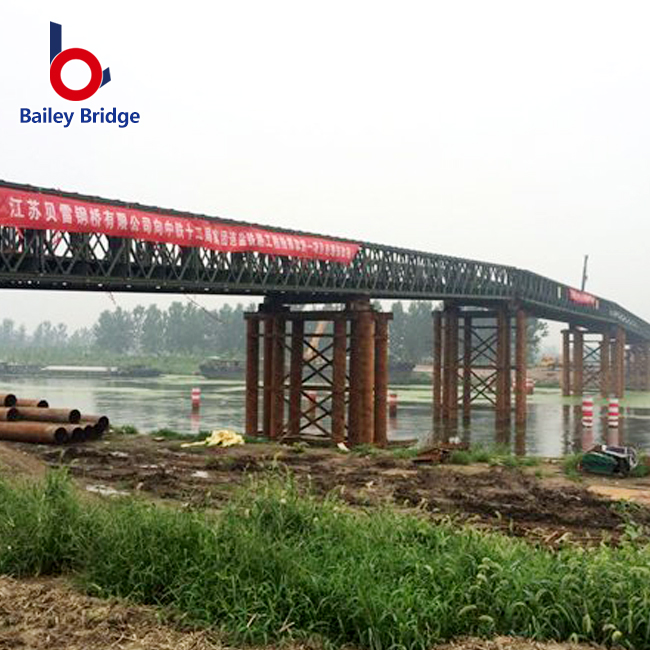
Engineers deploy these geometric frameworks across multiple demanding environments. They offer distinct advantages over cable suspension or solid arch alternatives. Their rigidity makes them indispensable for specific heavy-duty scenarios.
We see them functioning beautifully across four primary infrastructure categories:
Commercial Freight Railways: Trains impose immense, concentrated dynamic loads. Triangulated frameworks distribute these massive rolling weights efficiently. They prevent localized buckling under multi-ton freight cars. Solid beams would bounce or sway under such intense vibration.
Highway Overpasses: You often see them spanning multi-lane interstate highways. They require no central support columns. This keeps the active traffic lanes below completely clear and safe. Drivers face fewer concrete obstacles.
Pedestrian and Cyclist Pathways: Urban planners favor them for active transportation networks. They provide secure crossings over dangerous urban intersections. The open visual aesthetic blends nicely into modern cityscapes.
Industrial Pipeline Supports: Heavy industries use them to carry liquid or gas pipelines across rough terrain. The rigid steel structure protects sensitive pipes from environmental shifting. They prevent dangerous pipeline sags across ravines.
They function flawlessly in areas prohibiting traditional pier construction. Deep shipping channels reject mid-water pier placement. Unstable riverbeds prevent deep foundational drilling. A well-designed triangulated span bypasses these ground-level obstacles entirely. You bridge the gap by anchoring only at the stable riverbanks.
Modern construction demands speed and adaptability. Prefabricated structural components deliver exactly this required flexibility. You can assemble them in manageable sections off-site. Transporting small pieces proves much easier than hauling massive concrete girders.
Let us look at a specific, highly versatile iteration. A bailey truss bridge represents the absolute pinnacle of modular engineering. Originating from rigorous military necessity, it provides unmatched deployment speed. Workers connect standardized steel panels using simple, heavy-duty pins. They do not require complex welding equipment on site. You can assemble the framework on land. You then launch the entire assembly across a gap using specialized rollers.
Disaster relief teams rely heavily on these modular systems. When seasonal floods wash out permanent infrastructure, engineers deploy these replacements rapidly. They restore vital supply lines in mere days. Remote mining and logging operations also utilize them heavily. They gain quick, reliable access to isolated resource grids.
Once the project concludes, crews easily dismantle the structure. They load the standard panels back onto regular flatbed trucks. You can relocate the entire superstructure to a brand new site. This incredible reusability minimizes wasted material. It maximizes structural utility across multiple temporary access projects.
Every structural choice carries specific operational trade-offs. You must balance initial structural strength against long-term upkeep requirements. These triangulated frameworks offer incredible rigidity. However, they demand rigorous, sustained inspection routines.
The framework contains hundreds of interconnected nodes. It features numerous gusset plates and bolted joints. Each connection point requires monitoring.
Common Mistake: Neglecting joint clearance. Debris easily traps moisture inside tight gusset plate connections. This trapped moisture accelerates unseen rust deep within the joints.
Common Mistake: Ignoring minor impact damage. Over-height vehicles frequently strike lower sway braces. Even minor physical impacts compromise the overall geometric load distribution over time.
Best Practice: Implement drone-assisted visual inspections. Drones access high, dangerous chords easily. They capture detailed, high-resolution imagery of hard-to-reach steel connections.
Best Practice: Apply advanced protective coatings systematically. Routine painting prevents atmospheric corrosion effectively. Focus heavily on exposed areas prone to road salt accumulation.
Compared to a smooth concrete slab, this intricate geometry traps far more environmental debris. Bird droppings, road salt, and wind-blown dirt settle steadily on the exposed steel members. You must allocate adequate personnel resources for routine cleaning. Regular power-washing extends the lifespan of the protective paint. Proactive maintenance ensures the geometry remains uncompromised for decades.
Engineers have refined the basic triangulated concept into several standardized variations. Each distinct type handles mechanical forces slightly differently. We choose specific models based strictly on span length, load type, and clearance requirements.
Let us review a structural comparison of the most prominent designs.
Designation | Diagonal Configuration | Best Use Case | Structural Advantage |
|---|---|---|---|
Pratt | Diagonals slant inward toward the center point. | Freight rail lines and historic train routes. | Tension-focused diagonals reduce severe buckling risks under heavy rolling loads. |
Howe | Diagonals slant outward, away from the center. | Early steel projects and heavy timber constructions. | Compression-focused diagonals offer exceptional rigid stiffness for shorter spans. |
Warren | Alternating diagonals form equilateral triangles (W-shape). | Modern vehicular highways and commercial overpasses. | Uses less material while spreading vehicular loads highly evenly across the deck. |
K-Truss | Complex framing shapes diagonals into the letter K. | Exceptionally long spans crossing wide rivers. | Reduces the physical length of compression members, minimizing material buckling. |
Your choice depends largely on the expected live load type. Warren designs dominate modern vehicular traffic projects. Their simpler geometry reduces manufacturing time. Pratt variations remain historically popular for heavy rail lines. They handle the rhythmic pounding of train wheels masterfully. Selecting the correct geometry prevents over-engineering and keeps material usage optimized.
How do you decide if this is the correct engineering path? You need a clear, objective evaluation framework. Relying on aesthetic preferences often leads to structural inefficiencies.
First, assess your physical span length carefully. They excel strictly in the medium-to-long span range. Usually, this means open gaps spanning between 150 and 500 feet. Shorter spans often favor simple, prefabricated concrete beams. Exceptionally long stretches might eventually require massive suspension cables.
Second, evaluate your foundation constraints rigorously. Examine the ground below the crossing. If the soil cannot support intermediate concrete piers, you need a rigid, self-supporting span. The triangulated framework carries its own weight seamlessly across open air. It anchors securely only at the two extreme ends.
Third, consider the local environmental conditions. High-wind areas benefit tremendously from the open framework design. Wind passes straight through the superstructure effortlessly. A solid plate girder would catch the wind aggressively. It would experience dangerous lateral pressure during major storms.
Finally, look at your transportation logistics. Delivering massive, solid concrete beams requires highly specialized hauling logistics. It disrupts local traffic heavily. Conversely, you can transport modular steel chords on standard commercial trucks. You assemble them directly at the final destination. This logistical simplicity saves massive amounts of time on isolated job sites.
Selecting the right bridging solution requires balancing structural demands against environmental realities. By leveraging geometric efficiency, you cross vast distances securely without unnecessary mass.
Analyze your physical constraints early. Determine if poor ground conditions prohibit intermediate pier placement before finalizing your design blueprints.
Capitalize on inherent modularity. Consider prefabricated steel components for projects demanding accelerated deployment timelines or temporary resource access.
Plan for proactive lifelong maintenance. Establish a rigorous inspection schedule immediately after installation, focusing heavily on gusset plates and joint integrity.
Consult certified structural engineers aggressively. Accurate mathematical stress modeling prevents dangerous under-designing and keeps material usage strictly optimized.
A: When crews perform regular maintenance and apply protective coatings systematically, they easily exceed a 75-year lifespan. Many historic examples have remained fully operational for over a century. The absolute key factor involves aggressive corrosion prevention at the interconnected structural nodes.
A: Yes, they routinely carry extremely heavy highway traffic. Engineers specifically calculate the structural members to accommodate modern, high-density live loads. The geometric design prevents localized buckling under heavy commercial semi-trucks.
A: No. They are highly advantageous for remote areas. You transport them in small, modular pieces using standard vehicles. Crews assemble them using basic tools and heavy pins. This entirely eliminates the need for massive on-site lifting cranes.
A: This strictly depends on the required span and load. "Through" designs enclose the traffic completely for maximum rigidity over very long gaps. "Pony" designs leave the top open. This saves material on shorter spans while allowing taller vehicles to pass freely.
