Tel: +86 15262904857 E-mail: overseas@jsbaileybridge.com
- All
- Product Name
- Product Keyword
- Product Model
- Product Summary
- Product Description
- Multi Field Search


Views: 0 Author: Site Editor Publish Time: 2026-03-11 Origin: Site


The Bailey Bridge, a pivotal innovation in civil engineering, has played a crucial role in enabling rapid and reliable infrastructure construction worldwide. From military to civil applications, it has been a transformative solution to bridge-building challenges. But when exactly was the Bailey Bridge invented, and what makes it so enduringly valuable in various sectors?

The story of the Bailey Bridge begins during the Second World War, a period when fast, robust, and easy-to-assemble bridges were crucial to military operations. The need for such bridges arose after the German occupation of France in 1940, which led to the destruction of several key bridges. As a result, engineers were tasked with creating a lightweight, portable, and strong structure that could be easily assembled under challenging conditions.
The invention of the Bailey Bridge is credited to Lieutenant Colonel Sir Donald Bailey, a British Army engineer, who designed it in 1942. His design revolutionized bridge construction, allowing for faster deployment in military operations while maintaining strength and reliability.
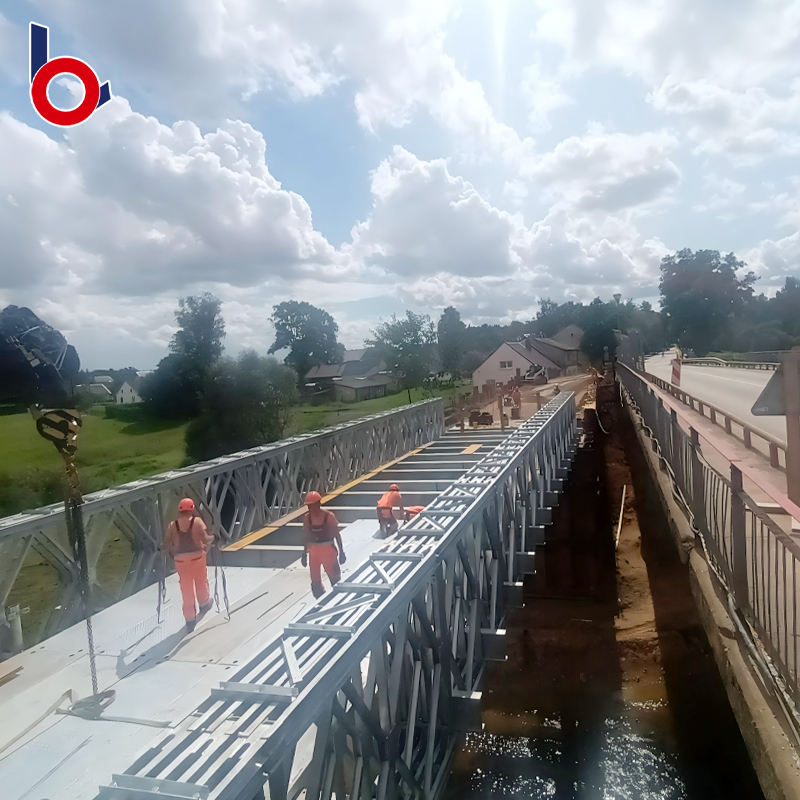
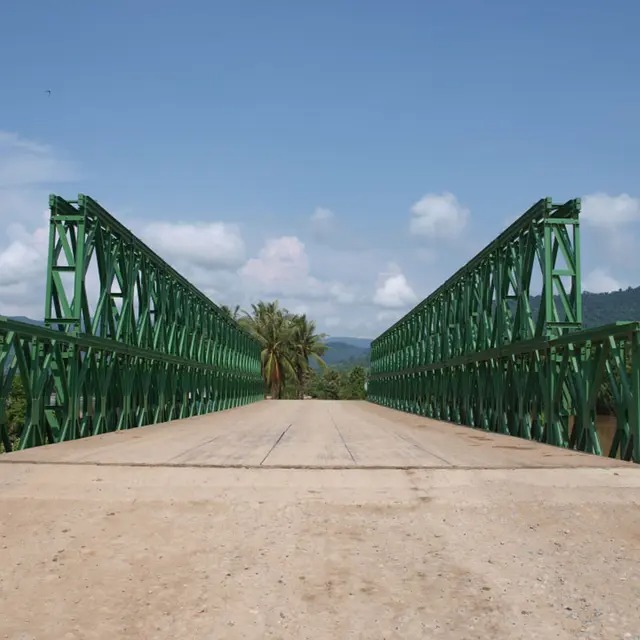
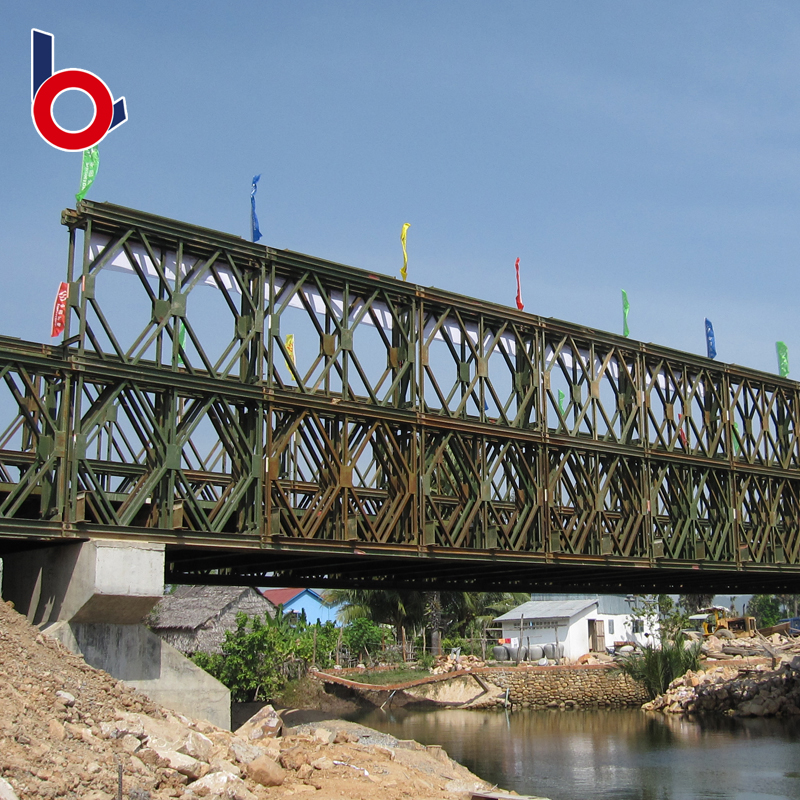
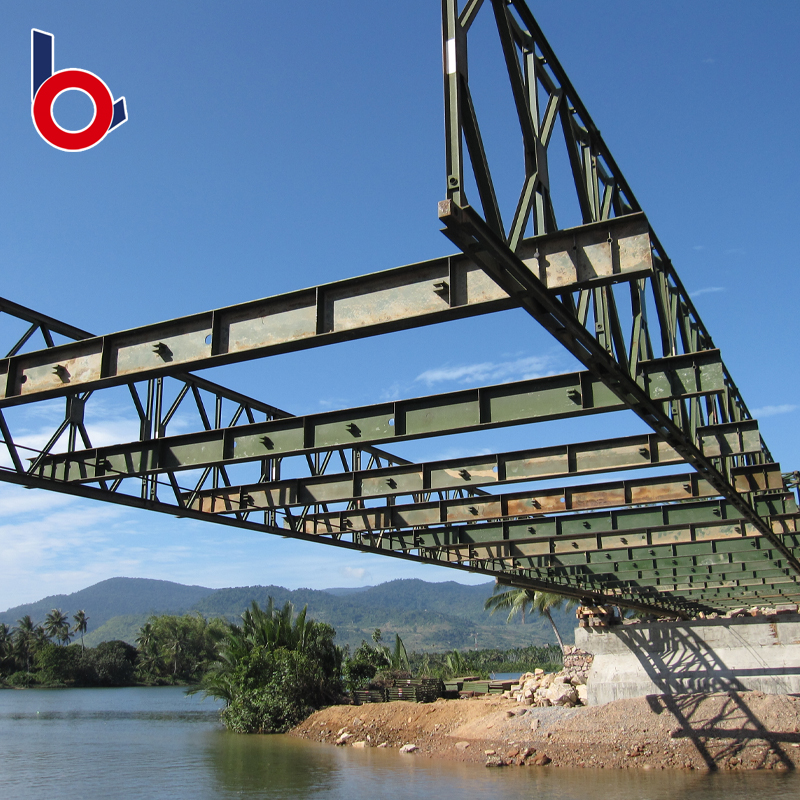
The Bailey Bridge was ingeniously designed to use prefabricated steel components that could be easily transported and assembled. This modular system allowed soldiers with minimal training to construct a bridge quickly, making it an invaluable tool in wartime logistics. The bridge's components include beams, panels, and trusses that could be easily interlocked to form a stable and durable structure.
One of the most innovative aspects of the Bailey Bridge was its ability to be extended to different lengths, accommodating a variety of vehicles and traffic types. Its modular nature allowed it to be adapted to different conditions and terrains, providing the military with a versatile and reliable solution for crossing rivers and ravines.
After World War II, the Bailey Bridge became a standard solution in infrastructure projects worldwide. Its adaptability and ease of use made it popular not only in military contexts but also in civilian engineering projects. Over time, the Bailey Bridge evolved with improved materials and techniques, allowing for even greater weight capacities and more extended service lives.
Even in the post-war era, the Bailey Bridge continued to be utilized in military operations. Its rapid deployment made it a crucial component in humanitarian efforts and disaster relief missions, where quick infrastructure restoration was vital. In addition to military use, Bailey Bridges have been deployed in remote regions where traditional bridge-building techniques are not feasible due to environmental or logistical challenges.
The Bailey Bridge's flexibility and portability also made it a valuable tool for civilian infrastructure projects, particularly in areas with difficult access. It has been used in road and rail transport networks, particularly in locations where a permanent structure is impractical or too costly to build.
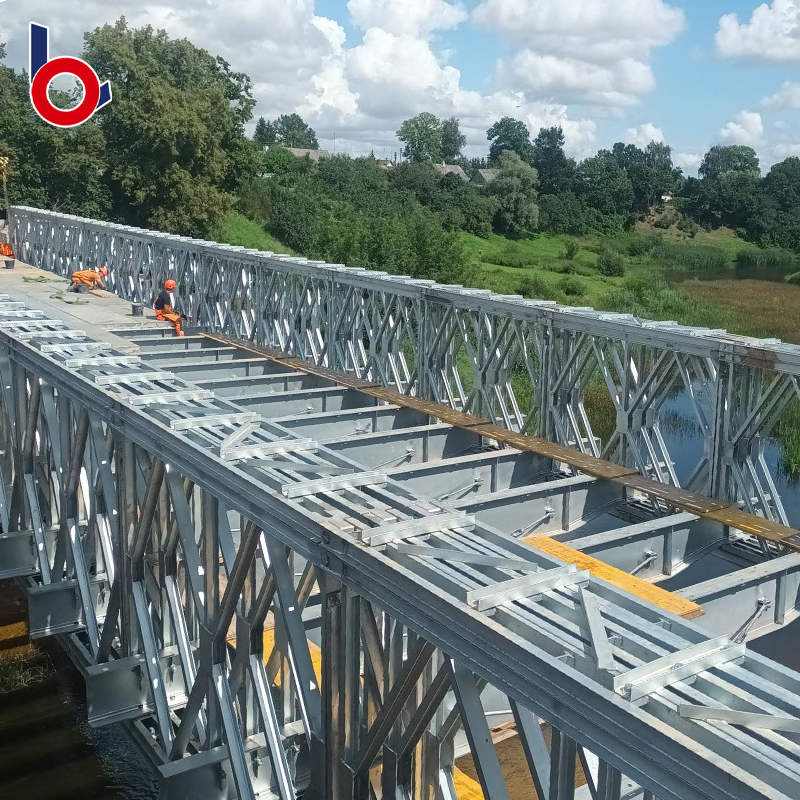
Today, the Bailey Bridge remains a widely used and highly valued engineering solution. Modern advancements in material science have led to the development of more durable and lightweight materials, ensuring that the Bailey Bridge continues to serve a variety of functions.
The advent of computer-aided design (CAD) technology has allowed engineers to improve the structural integrity and efficiency of Bailey Bridges. Additionally, new construction techniques and materials have enabled faster assembly times and longer service lives for these bridges.
In the context of sustainable infrastructure, the Bailey Bridge is increasingly seen as a solution to build environmentally friendly structures that minimize waste and environmental impact. Its modular nature allows for components to be reused, contributing to a circular economy approach in civil engineering projects.
The Bailey Bridge continues to evolve, with new applications and adaptations being explored for various industries. From its humble beginnings as a wartime necessity to its current role in infrastructure development, the Bailey Bridge remains an enduring symbol of engineering innovation and practicality.
In many developing countries, the Bailey Bridge is a vital tool for bridging infrastructure gaps. Its affordability, ease of use, and ability to be constructed with minimal training make it a perfect solution for areas where resources are limited.
Looking ahead, Bailey Bridges may undergo further refinements with the incorporation of smart technologies, such as sensors for structural monitoring, to increase safety and efficiency.
Since its invention in 1942, the Bailey Bridge has had a profound impact on both military and civilian engineering. Its innovative design has paved the way for modern bridge construction, and its continued use in emergency and infrastructure projects worldwide highlights its lasting legacy.
As we move toward the future, the Bailey Bridge remains a testament to the power of ingenuity and practical engineering solutions.
At Jiangsu Bailey Steel Bridge Co., Ltd., we continue to carry forward the legacy of the Bailey Bridge with our own innovative, prefabricated steel bridges. Our commitment to high-quality manufacturing and cutting-edge technology ensures that we meet the needs of modern infrastructure projects, from military applications to large-scale civilian constructions. With over 18 years of experience, we remain dedicated to providing durable and reliable bridge solutions for projects worldwide.
What is a Bailey Bridge?
A Bailey Bridge is a portable, prefabricated bridge used for quick assembly in both military and civilian infrastructure projects. It was invented by Lieutenant Colonel Sir Donald Bailey during World War II.
When was the Bailey Bridge invented?
The Bailey Bridge was invented in 1942 by Sir Donald Bailey, a British Army engineer, to meet the need for a lightweight and easy-to-assemble bridge during World War II.
How does a Bailey Bridge work?
The Bailey Bridge uses modular steel components that can be transported easily and assembled by individuals with minimal training. Its design allows for quick construction in various environments.
Can a Bailey Bridge be used for large-scale civilian projects?
Yes, Bailey Bridges have been used extensively in both military and civilian projects, especially in areas with difficult terrain or where permanent bridges are not feasible.
What are the benefits of using a Bailey Bridge today?
The Bailey Bridge offers flexibility, rapid deployment, and cost-effectiveness. It is especially useful in emergency situations, humanitarian aid efforts, and developing countries where infrastructure development is needed quickly.


