Tel: +86 15262904857 E-mail: overseas@jsbaileybridge.com
- All
- Product Name
- Product Keyword
- Product Model
- Product Summary
- Product Description
- Multi Field Search


Views: 0 Author: Site Editor Publish Time: 2026-03-12 Origin: Site


When disaster strikes or infrastructure fails, the gap between "accessible" and "isolated" often comes down to hours, not weeks. Civil engineers and project managers frequently turn to the bailey bridge for these critical moments. This pre-engineered, truss-based system offers a unique solution for rapid deployment without heavy concrete infrastructure. However, viewing this structure merely as a large-scale "Lego set" is a dangerous oversimplification. Successful assembly requires rigorous civil engineering, precise site geometry calculations, and strict adherence to launch logistics.
The following guide serves as a comprehensive resource for professionals evaluating the assembly process. We move beyond basic descriptions to cover the technical realities of construction, from geotechnical site preparation to the cantilever launch method. Specifically, we will address how modern iterations, such as the compact bailey bridge, provide superior adaptability for difficult-to-access terrains where heavy machinery cannot go.
Modular Advantage: How pre-engineered components reduce design time and allow manual assembly in resource-scarce environments.
The "Cantilever Launch": Understanding the unique deployment method that eliminates the need for falsework or intermediate supports during construction.
Resource Requirements: A realistic look at the manpower vs. machinery balance (crane-free options vs. accelerated mechanized builds).
Timeline Expectations: Typical erection times based on span length and crew experience.
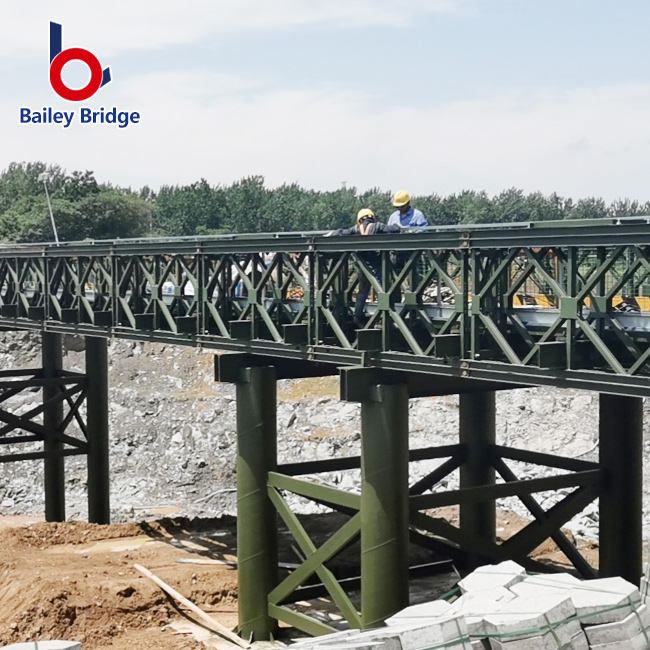
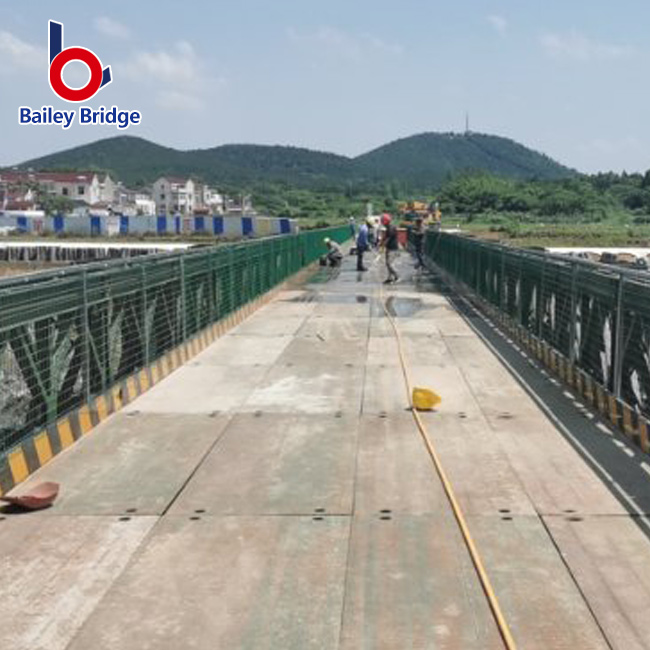
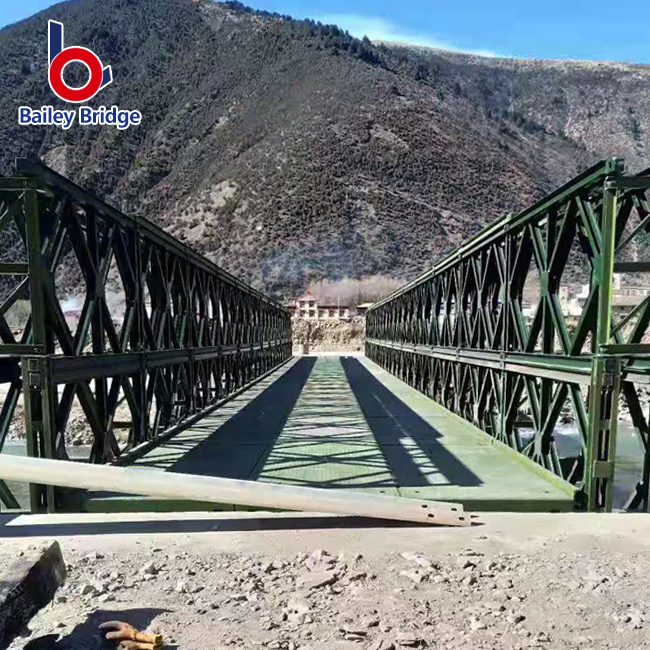
Before a single steel panel arrives, the success of the bridge depends on what lies beneath it. The versatility of a modular bridge allows it to span diverse gaps, but the laws of physics regarding ground support remain immutable.
You must verify the soil bearing capacity at both banks. The ground must support not only the live traffic load but also the dead load of the steel structure itself. In temporary scenarios, engineers often debate the necessity of concrete spread footings versus timber grillages.
For short-term relief operations, a well-constructed timber grillage often suffices. It distributes the load effectively over a wider area of soil. However, if the site features loose, sandy soil or high water tables, concrete footings become mandatory to prevent settlement. A sinking abutment can twist the truss, compromising the structural integrity of the entire span.
Precision is non-negotiable. You must measure the gap width exactly to calculate the required number of panels and bays. An error of a few inches here can leave the bridge short of the bearings on the far bank. Beyond the gap itself, the most critical decision involves establishing the "Launch Plain."
The launch plain is the flat ground directly behind the abutment. This area serves as your assembly line. You need enough length to build the bridge and its launching nose before pushing it across the gap. If the terrain behind the abutment rises sharply or curves, you cannot assemble the structure in a straight line. This often requires significant earthmoving to create a level platform aligned perfectly with the bridge centerline.
Organizing components efficiently speeds up construction. You need designated zones for panels, transoms, and stringers. Chaos in the staging area leads to lost pins and delayed builds. For remote military or disaster relief operations, the logistics of delivery are just as vital. The modern compact bailey bridge is designed for these logistical constraints. Its components fit into standard shipping containers or can be transported via C-130 aircraft, making it the preferred choice when roads to the site are compromised or non-existent.
Once site data is confirmed, you select the bridge configuration. This determines the strength and weight of the final structure.
Engineers use a specific coding system to describe the arrangement of panels. This system balances the weight of the steel against the Military Load Class (MLC) or tonnage requirement. Adding more panels increases strength but also adds dead weight, which makes the launch more difficult.
| Configuration Code | Description | Typical Use Case |
|---|---|---|
| Single-Single (SS) | One truss row, one story high. | Short spans, light vehicles, or pedestrian use. |
| Double-Single (DS) | Two truss rows, one story high. | Medium spans, standard truck traffic. |
| Double-Double (DD) | Two truss rows, two stories high. | Long spans or heavy equipment transport. |
| Triple-Double (TD) | Three truss rows, two stories high. | Extreme loads or maximum span lengths. |
Novice builders often question the need for the "Skeleton Nose." This is a lightweight section of the bridge assembled at the front, consisting only of panels and sway braces without the heavy decking. It is non-negotiable.
The nose functions as a probe. It reaches the far bank before the center of gravity of the main bridge passes the near bank rollers. Without a sufficiently long launching nose, the bridge would simply tip into the gap as you push it out. Calculating the correct nose length relative to the heavy main bridge is a precise physics problem involving counterweights and moments.
If you are using stock from inventory rather than a factory-new kit, inspection is critical. Check every panel chord for bends and every pin hole for elongation. Fatigue cracks in the steel or corrosion on the pins can lead to catastrophic failure under load. Protocols must be strict: if a component shows deep rust or deformation, discard it immediately. It is never worth the risk.
With materials staged and the design set, the physical build begins. This phase demands disciplined teamwork and strict adherence to safety sequences.
The bridge rolls into place, it is not lifted. Therefore, the roller layout dictates the path. You will place rocking rollers on the edge of the abutments and plain rollers at intervals along the construction bank (the launch plain).
Technical Tip: Ensure perfect alignment. If one roller is slightly off-center or lower than the others, the bridge will drift sideways or bind during the push. Jamming a multi-ton steel structure halfway across a river is a nightmare scenario you want to avoid. Use a theodolite or string lines to guarantee a straight trajectory.
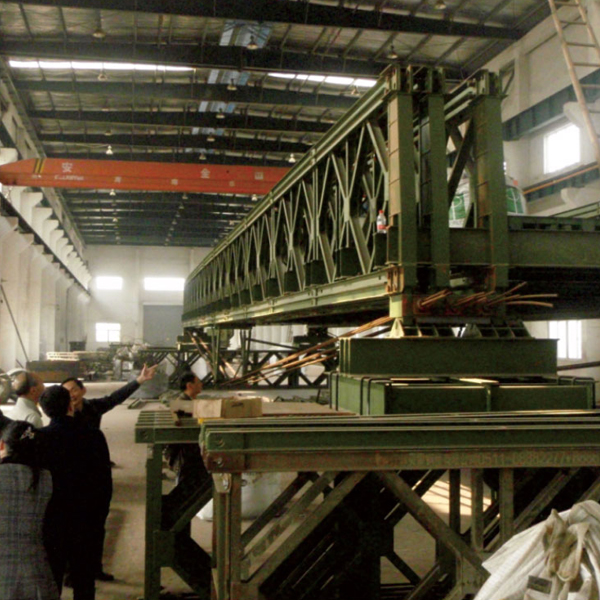
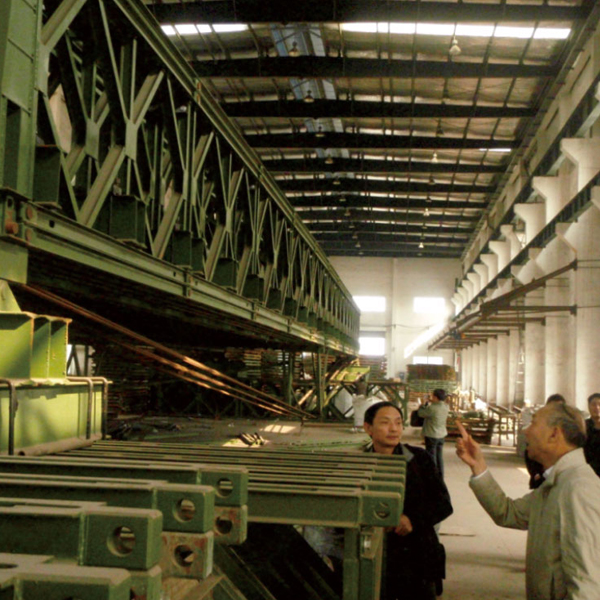
Construction starts with the launching nose. Because it carries no traffic, it lacks heavy transoms and decking. Crews assemble these panels first, positioned at the very front of the roller line. Pay close attention to torque specifications. Every panel pin must be fully seated and retained with safety clips. Bracing bolts must be torqued to specification to ensure the nose is rigid enough to land on the far bank rollers without sagging excessively.
Behind the nose, you assemble the main bridge body. This includes the full structural system: panels, heavy transoms, and sway braces. Here, the advantages of a compact bailey bridge become apparent. These modern systems often utilize higher-tensile steel, resulting in lighter components. Lighter panels reduce crew fatigue significantly, which maintains safety standards during long shifts.
Connect the panels systematically. Install transoms into the lower chords of the panels to tie the two sides of the bridge together. Tighten sway braces immediately to square the structure; do not leave them loose for later, as a skewed bridge will not launch straight.
Once enough bays are built to act as a counterweight, the launch begins. You can propel the bridge using manpower, a bulldozer, or a hydraulic pulling system.
Manual Pushing: Feasible for shorter, lighter spans. It requires a coordinated team acting on command.
Mechanical Assist: For heavier double-story configurations, a bulldozer or truck can push the structure.
Throughout the push, a supervisor must monitor the center of gravity. The bridge must remain balanced on the near bank rollers until the nose lands safely on the far bank rollers.
The launch ends when the bridge completely spans the gap and the nose is dismantled on the far side. However, the structure is still sitting high up on rollers, not on its permanent bearings.
This transition is delicate. You place hydraulic jacks under the end posts of the bridge. The team lifts the entire structure slightly—just enough to slide the rollers out. Then, they lower the bridge slowly onto the base plates and bearings. This process, known as "jacking down," must happen simultaneously at all four corners (or in synchronized stages) to prevent twisting the frame.
Never install the decking before the launch. Adding steel deck units or heavy timber planks during assembly adds massive unnecessary weight, requiring a much larger counterweight and increasing the risk of tipping. Once the bridge is seated on its bearings, crews can lay the decking rapidly.
After the deck is secured, install the curbs (often called ribbons) and footwalks. These elements are vital for vehicle guidance and pedestrian safety, ensuring traffic stays centered on the transoms.
The bridge deck sits higher than the ground level due to the height of the transoms and bearings. You must build approach ramps to transition traffic smoothly. These can be built using earth, gravel, or pre-fabricated steel ramp units supplied with the bridge kit. The slope should be gradual enough to prevent vehicles from bottoming out as they enter the bridge.
Visual completion does not equal operational readiness. Before opening the route, rigorous verification is mandatory.
Create a final checklist. Verify that every panel pin has its safety clip installed. Vibration from traffic can work an unsecured pin loose, leading to structural failure. Check that all sway braces and transom clamps are tightened. Measure the "sag" or deflection of the bridge at its midpoint. It should fall within the manufacturer’s specified limits for that span length.
Do not assume the calculations are perfect. Perform a static load test by parking a vehicle of known weight at the center of the span. Measure the deflection. Then, perform a dynamic test with the vehicle moving at slow speeds. Establishing a speed limit is crucial for modular bridges; high speeds create impact loads on the joints that can shorten the lifespan of the components.
Steel settles. After the first 24 hours of heavy traffic usage, you must re-inspect the bridge. Bolts often loosen slightly as the components "bed in." A routine tightening schedule should be part of the bridge's operational plan, especially for temporary installations that might remain in place for months.
Building a bailey bridge is less about construction innovation and more about disciplined logistical execution. It proves that with the right planning, even the most formidable gaps can be crossed in days rather than months. Whether you are reconnecting a community after a flood or moving heavy equipment to a remote mining site, the success of the project relies on respecting the engineering principles behind the steel.
Organizations often face a "build vs. buy" decision. Renting a fleet for a temporary fix makes financial sense for short-term projects, while purchasing assets is smarter for long-term infrastructure inventory. Regardless of the ownership model, we strongly encourage consulting with structural engineers to verify configuration loads before breaking ground. The safety of the crossing depends on it.
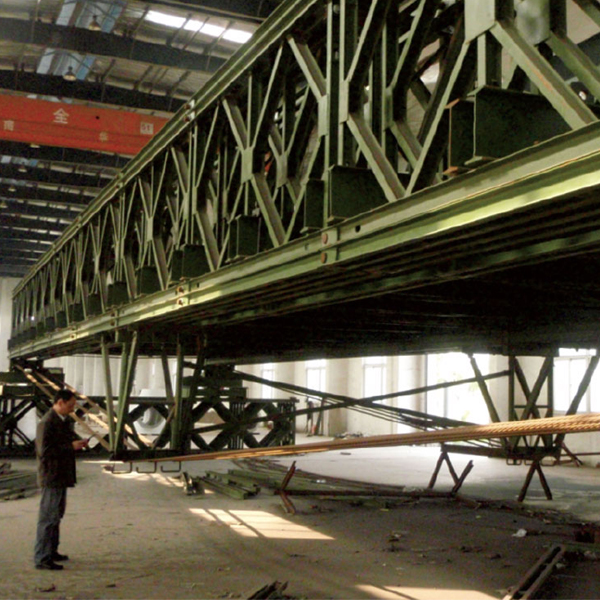
A: The timeline varies significantly based on the span length, crew size, and available mechanical aid. A highly trained military crew can erect a standard span in several hours. Conversely, a civilian contractor team working with a longer span and manual tools might take several days. Preparation of the abutments and site grading usually consumes more time than the actual assembly of the steel components.
A: No, a crane is not mandatory, which is a major advantage of the system. The cantilever launch method allows the bridge to be pushed across the gap using rollers and a lightweight launching nose. While a crane can speed up the unloading of trucks and staging of materials, the actual erection and placement over the water can be accomplished entirely without one, reducing total cost of ownership.
A: The primary differences lie in the panel size, steel grade, and transportability. A modern compact bailey bridge typically uses higher tensile steel, allowing for lighter panels that are easier to handle manually. Crucially, compact systems are engineered to fit efficiently inside standard ISO shipping containers, simplifying logistics for international shipping compared to older, bulkier heritage designs.
A: Yes, they can serve as permanent structures if properly maintained. While often deployed for 1 to 5 years as temporary relief, a bridge with hot-dip galvanized components can last for decades. Permanent installations usually require concrete abutments and a more rigorous inspection schedule to monitor for fatigue and corrosion, but they are fully capable of long-term service.
A: The maximum span depends heavily on the truss configuration (Single, Double, or Triple story) and the load class required. Generally, a single span can reach up to 60+ meters (approx. 200 feet) without intermediate piers. For wider gaps, intermediate support piers or pontoon systems are necessary to support the structure and maintain the required load-carrying capacity.


