Tel: +86 15262904857 E-mail: overseas@jsbaileybridge.com
- All
- Product Name
- Product Keyword
- Product Model
- Product Summary
- Product Description
- Multi Field Search


Views: 0 Author: Site Editor Publish Time: 2026-01-17 Origin: Site


Disasters, whether natural or man-made, often create chaos and disrupt essential infrastructure, particularly transportation networks. In such dire circumstances, the ability to quickly restore connectivity is vital for effective disaster response and relief operations. One of the most critical tools used in emergency scenarios to bridge gaps in infrastructure is the Bailey Bridge. This versatile and modular steel bridge has become a cornerstone in disaster relief efforts worldwide due to its rapid deployment, cost-effectiveness, and adaptability to various environments.
In this article, we explore the role of Bailey Bridges in disaster relief and emergency response, discussing their importance, advantages, and real-world applications in various disaster-stricken regions. We will also dive into how these bridges are used by emergency response teams and why they outperform traditional bridge-building methods in disaster scenarios.
A Bailey Bridge is a portable, pre-fabricated modular bridge designed for rapid construction and use in military or disaster-relief situations. Developed during World War II by the British engineer Donald Bailey, the bridge was initially intended for military operations. Its modular nature allows for easy transportation and swift assembly on-site, making it ideal for emergency situations where time and resources are limited.
The key features of a Bailey Bridge include:
Modular Design: The bridge is composed of a series of interconnected panels or units that can be easily transported and assembled in the field.
Lightweight: The components are lightweight yet robust, making them easy to move and install without the need for heavy construction machinery.
Adjustable Length: The modular panels can be used to create bridges of varying lengths, adapting to different environmental and infrastructural requirements.
Quick Construction: Bailey Bridges can be assembled in just a few hours or days, depending on the size, and can carry heavy loads.
These features make Bailey Bridges indispensable in situations where conventional infrastructure is destroyed, such as during natural disasters like earthquakes, floods, or hurricanes.
The Bailey Bridge was first designed and used by the British military during World War II. Its primary purpose was to provide a quick and reliable means of crossing rivers and obstacles in battle zones. As a result of its success, the design was adapted for civilian and disaster relief purposes in the post-war period. Today, it continues to serve as a vital tool for humanitarian aid organizations, governments, and military forces worldwide.
In disaster relief operations, the ability to quickly restore transportation networks is critical for delivering aid, evacuating individuals, and ensuring access to affected areas. Bailey Bridges excel in these scenarios due to their rapid deployment capabilities. Since they are pre-fabricated and modular, these bridges can be assembled on-site with minimal equipment.
Key advantages of Bailey Bridges for rapid deployment include:
Ease of Transport: The components can be transported by road, rail, or air to the disaster zone.
Quick Setup: A Bailey Bridge can be erected in a matter of hours, depending on the scale of the bridge required. This rapid deployment is crucial in situations where traditional bridge-building methods would take too long to be effective.
Adaptable to Remote Locations: Bailey Bridges can be set up in remote and difficult-to-reach locations, where access for larger construction equipment is not possible.
Bailey Bridges are designed to be adaptable to various environments, making them suitable for a wide range of disaster scenarios. These bridges can be constructed over rivers, damaged roads, or collapsed infrastructure, and are designed to handle different loads, from pedestrian traffic to heavy vehicles.
Flooding and Water Crossings: In flood-prone areas, Bailey Bridges can provide a safe and reliable crossing over floodwaters, restoring vital connections.
Earthquake Recovery: In the aftermath of an earthquake, damaged bridges and roads can be replaced with Bailey Bridges, allowing relief teams to access isolated communities.
Urban and Rural Environments: Whether in densely populated cities or rural, undeveloped regions, Bailey Bridges can be customized to fit the terrain and infrastructure needs.
One of the most significant benefits of Bailey Bridges in disaster relief is their role in saving lives and restoring essential infrastructure. In the aftermath of a disaster, ensuring the flow of resources, including food, medical supplies, and personnel, is crucial. Bailey Bridges provide a quick and reliable means of reopening essential transportation routes, allowing for the efficient delivery of relief materials and services.
Moreover, they allow local governments and humanitarian organizations to:
Re-establish critical connections between affected communities and major cities.
Speed up the delivery of medical care and supplies to remote or isolated areas.
Restore mobility for people who may be trapped or unable to evacuate due to infrastructure damage.
During a disaster, emergency response teams must move quickly to assess the situation, provide medical assistance, and secure affected areas. The construction of a Bailey Bridge significantly enhances the mobility of these teams, providing them with an immediate means of crossing destroyed infrastructure or difficult terrain.
Access to Cut-off Regions: Emergency teams can use Bailey Bridges to quickly reach areas that would otherwise be inaccessible due to damaged roads and bridges.
Faster Deployment of Personnel: Bailey Bridges provide a fast route for deploying rescue teams and essential personnel to affected regions, speeding up response times.
Bailey Bridges also play a critical role in logistics during disaster response. They facilitate the transportation of goods, such as food, water, medical supplies, and heavy equipment, which are essential for sustaining relief efforts.
Facilitating Transport of Supplies: Heavy-duty Bailey Bridges can support trucks, medical vehicles, and equipment used in disaster recovery operations.
Streamlining Supply Chains: These bridges allow for the quick and efficient transportation of supplies, reducing bottlenecks that could otherwise delay aid delivery.
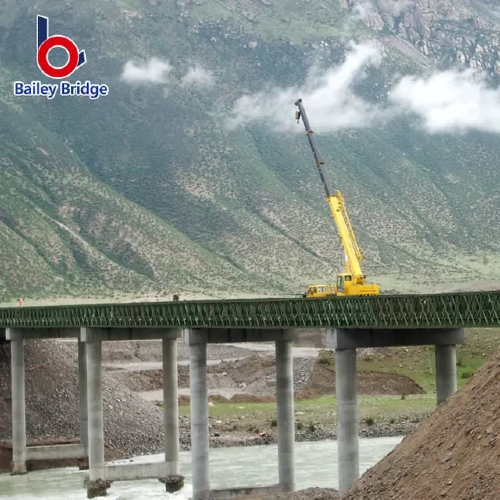
The primary advantage of Bailey Bridges over traditional bridge construction methods is their cost and time efficiency. Traditional bridges require significant amounts of raw materials, skilled labor, and construction equipment, and the process can take weeks or even months. In contrast, Bailey Bridges can be built in just a few days, significantly reducing the overall cost and time required to restore essential infrastructure.
Table 1: Comparison of Bailey Bridges and Traditional Bridge Construction
Factor | Bailey Bridge | Traditional Bridge |
Construction Time | A few hours to days | Weeks to months |
Cost | Low due to modular design | High due to materials and labor |
Labor Requirements | Minimal, can be assembled by a small team | Large, requires skilled labor and heavy equipment |
Material Requirements | Lightweight, pre-fabricated modules | Heavy materials, complex foundation requirements |
Flexibility and Adaptability | High, can be adapted to various environments | Limited by geographic and structural constraints |
Unlike traditional bridge construction, which often requires complex machinery and a solid foundation, Bailey Bridges require minimal infrastructure to be set up. They can be deployed in environments where other types of construction would be impossible, such as areas that are flooded or have no access to heavy machinery.
No Need for Heavy Equipment: Most Bailey Bridges can be assembled using hand tools or basic machinery, reducing the need for specialized equipment.
Adaptable to Varying Terrain: Bailey Bridges can be constructed in areas where traditional methods would struggle, such as mountainous or flooded regions.
Once a Bailey Bridge is no longer needed, it can be easily disassembled and repurposed for use elsewhere. This makes them highly flexible for temporary disaster relief efforts and long-term infrastructure projects.
Reusability: The components of a Bailey Bridge can be disassembled and reused in different locations, making it a sustainable option for multiple disaster response efforts.
Simple Maintenance: Bailey Bridges require minimal upkeep due to their simple construction and durable materials.
The design and materials of Bailey Bridges are continuously evolving. Recent advancements include the use of high-strength steel, corrosion-resistant coatings, and improved modular designs. These innovations enhance the durability and load-bearing capacity of Bailey Bridges, making them even more effective in challenging environments.
As climate change and natural disasters become more frequent, the need for rapid response solutions like Bailey Bridges will only increase. More countries and organizations are adopting Bailey Bridges as a standard tool for disaster relief, ensuring that they can quickly restore infrastructure and support emergency response teams.
In conclusion, Bailey Bridges are essential in disaster relief and emergency response efforts, offering rapid deployment, versatility in diverse environments, and exceptional cost-effectiveness. Their modular design allows for quick restoration of vital transportation links, enabling governments, humanitarian organizations, and military forces to respond swiftly in times of crisis. As technology advances, the role of Bailey Bridges will only grow more significant, solidifying their position as a cornerstone in disaster recovery and infrastructure rebuilding.
At Jiangsu Bailey Steel Bridge Co., LTD., we specialize in the design, production, and installation of Bailey Bridges, providing tailored solutions for both temporary and long-term infrastructure needs. With our years of expertise and commitment to quality, we are proud to support disaster recovery efforts globally. Whether you're facing a disaster response challenge or planning for future infrastructure needs, we invite you to contact us for more information and discuss how we can assist in your projects. Let us help you bridge the gap when it matters most.
Bailey Bridges are known for their rapid deployment, low cost, and adaptability to different environments. They can be set up quickly to restore transportation links and facilitate the delivery of aid.
Depending on the complexity and size, Bailey Bridges can be assembled in just a few hours to a few days, making them ideal for emergency situations.
Yes, Bailey Bridges are designed to carry heavy loads, including trucks and medical vehicles, ensuring that relief efforts can continue smoothly.
Bailey Bridges are highly adaptable and can be used in a wide range of weather conditions, including floods, earthquakes, and snowstorms.
Bailey Bridges are much more cost-effective than traditional bridge construction, as they require fewer materials, less labor, and less time to build.


