Tel: +86 15262904857 E-mail: overseas@jsbaileybridge.com
- All
- Product Name
- Product Keyword
- Product Model
- Product Summary
- Product Description
- Multi Field Search


Views: 0 Author: Site Editor Publish Time: 2025-11-25 Origin: Site


Temporary detour bridges are critical infrastructure components used to maintain the flow of traffic in situations where permanent bridges or roads are under construction, repair, or in need of replacement. These bridges allow traffic to divert around construction sites, natural disasters, or other disruptions, ensuring that transportation is not impeded for an extended period. While temporary detour bridges provide a valuable service, their design and installation come with several challenges. This article explores the key challenges involved in designing and installing temporary detour bridges, as well as the solutions that can help address these challenges effectively.
Temporary detour bridges are primarily used in situations where existing roads or bridges are unavailable due to construction or damage. These bridges are crucial for maintaining traffic flow while permanent solutions are being built or repaired. They can be found in various scenarios, including:
Road Closures: When a road or bridge is closed for maintenance, repairs, or upgrades, a detour bridge helps reroute traffic, preventing congestion and delays.
Disaster Relief: In cases of flooding, earthquakes, or other natural disasters, temporary detour bridges are essential for reconnecting communities that might otherwise be isolated due to damaged infrastructure.
Construction Projects: During the construction of new bridges or roads, detour bridges provide a safe and efficient way for vehicles to bypass construction zones, reducing disruptions and ensuring public safety.
These bridges typically serve as short- to medium-term solutions, with their design and construction tailored to the specific needs of the project and the traffic volume expected during the detour period.
Designing a temporary detour bridge comes with several unique challenges. While the ultimate goal is to ensure safety, functionality, and minimal disruption to traffic, engineers must balance these priorities with cost considerations and time constraints. Below are some of the most significant challenges involved in designing temporary detour bridges.
One of the primary concerns when designing a detour bridge is ensuring it can support the weight of the traffic it will carry. Detour bridges need to accommodate a range of vehicles, from light cars and trucks to heavy construction machinery or emergency vehicles. The load capacity must be calculated carefully based on the expected traffic flow and the types of vehicles likely to use the bridge.
Solution: Engineers often use modular components in temporary detour bridge designs, as these can be customized to meet specific load-bearing requirements. Advanced structural analysis software can be used to model traffic loads, ensuring that the bridge design will support the expected demands.
Every detour bridge site comes with its own set of environmental and geographical challenges. Site conditions such as uneven terrain, flooding risks, soil stability, or the presence of water bodies (rivers, lakes, etc.) must all be taken into account during the design process.
Solution: Engineers typically perform thorough site assessments to evaluate the physical conditions of the area where the bridge will be installed. Temporary detour bridges may need special foundations or supports, such as floating platforms in areas prone to flooding or deep foundations for areas with unstable soil.
Proper traffic management is essential to the success of a detour bridge. With the increased flow of vehicles through the temporary bridge, there is a heightened risk of accidents, congestion, and delays. Engineers must design bridges that allow for smooth traffic flow while considering the layout of surrounding roads, signage, and lane markings.
Solution: Traffic engineers work in tandem with bridge designers to create an optimized detour route. Temporary road signs, traffic lights, and lane divisions can be used to direct traffic effectively. Additionally, detour bridges can be equipped with features such as wider lanes, higher load limits, and clear visibility to ensure safer traffic flow.
Temporary detour bridges often need to be installed in environmentally sensitive areas. For example, they might need to cross rivers, wetlands, or protected natural areas, requiring designs that minimize environmental impact during both installation and removal.
Solution: Environmentally friendly designs, such as bridges that avoid disturbing local ecosystems or that use recyclable materials, are essential for reducing environmental harm. Engineers must also follow local environmental regulations, which may require an Environmental Impact Assessment (EIA) before construction begins.
Temporary detour bridges are often needed quickly to ensure minimal disruption to traffic. In many cases, these bridges need to be designed, manufactured, and installed on tight timelines. This creates challenges in sourcing materials, coordinating labor, and ensuring that all aspects of the bridge meet the required standards.
Solution: The use of pre-fabricated, modular bridge systems can significantly reduce the time required for installation. Pre-manufactured parts can be quickly assembled on-site, minimizing delays and allowing the detour bridge to be operational as soon as possible.
After overcoming the challenges in designing a temporary detour bridge, the next critical step is installation. Here, the primary goal is to ensure that the bridge is safely constructed with minimal disruption to surrounding infrastructure and traffic flow. Below are some key solutions for effective installation.
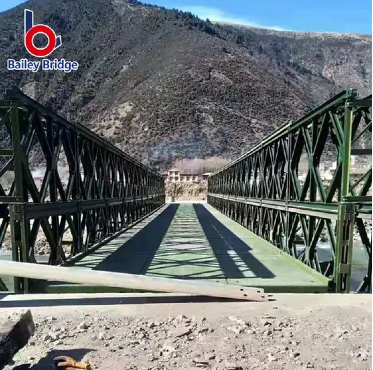
Modular bridge systems are a popular solution for temporary detour bridge installation. These systems consist of pre-manufactured components that can be quickly assembled at the installation site. Modular bridges are highly flexible, meaning that they can be adapted to fit various site conditions and traffic requirements.
Advantages: Modular bridge systems offer quick assembly and disassembly, reducing the construction time significantly. They also offer flexibility in design, allowing engineers to modify the bridge layout as needed.
When a detour bridge needs to span a river or body of water, floating bridges can be an effective solution. These bridges are designed to float on the water’s surface, offering a stable platform for vehicle traffic while being minimally invasive to the surrounding environment.
Advantages: Floating bridges are ideal for sites with high water levels or areas prone to flooding. They are quick to deploy and can be removed or relocated with relative ease when no longer needed.
For construction in areas with unstable soil or areas prone to erosion, temporary detour bridges require specialized foundations. In these cases, engineers may use drilled shafts, piles, or other forms of foundation reinforcement to ensure stability.
Advantages: Proper foundation design helps prevent the bridge from settling or shifting, even when under heavy loads. This ensures long-term safety and minimizes the risk of structural damage during use.
Once the detour bridge is operational, ongoing maintenance is crucial to ensure it remains safe and functional throughout its use. Regular inspections, structural evaluations, and traffic monitoring help detect any issues early on.
Maintenance Solution: Frequent checks for wear and tear, particularly at load-bearing points and joints, can prevent accidents. If a bridge is exposed to harsh weather conditions, additional inspections may be necessary to assess for potential damage.
Removal: When the temporary detour bridge is no longer needed, it should be carefully dismantled and removed. Any environmental impacts caused by the bridge should be mitigated, and materials should be reused or recycled where possible.
Designing and installing temporary detour bridges requires a thoughtful approach to engineering, project management, and safety considerations. By addressing challenges such as load capacity, site conditions, traffic management, environmental impact, and time constraints, engineers can create bridges that serve as reliable solutions for maintaining traffic flow during construction, repairs, or natural disasters.
The ability to provide effective detour routes for vehicles and pedestrians ensures that infrastructure projects continue with minimal disruption and that communities remain connected during times of change. With the use of modern materials, modular systems, and strategic planning, temporary detour bridges are becoming more efficient, environmentally friendly, and cost-effective than ever before.


